
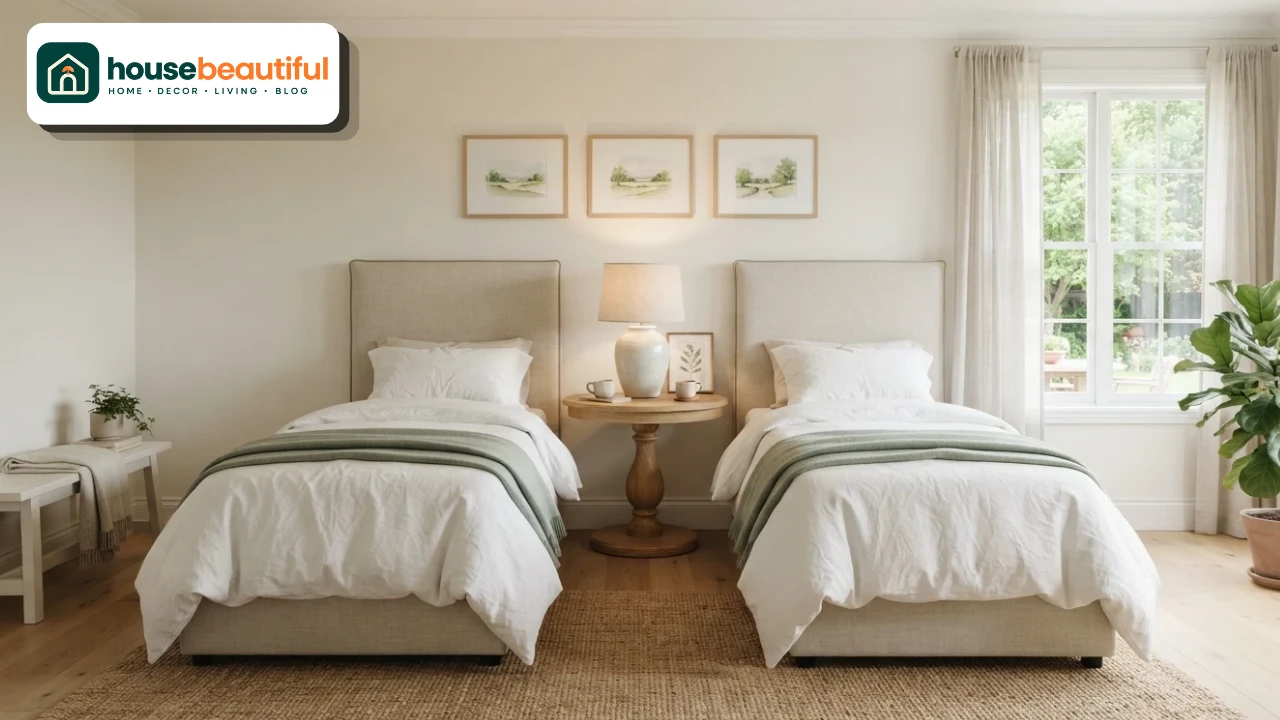
A guest room has a hard job. One week it hosts your parents, the next week two friends who’d rather not share a bed, and over the holidays it might hold your nieces and nephews.
That’s why twin beds are so useful. Two twins can sleep two adults who aren’t a couple, two kids,s or one guest who wants a little extra space. One twin can turn a tiny spare room or home office into a real place to sleep.
The challenge is making twin beds feel grown-up and welcoming, not like a dorm or a summer camp. This guide covers how to plan a guest room with a twin bed setup, from sizes and spacing to layouts and 25 design ideas that make guests feel at home.
Why Choose Twin Beds for a Guest Room?
A queen bed is the default in most guest rooms, but it only works well for couples. Twin beds give you more options.
Flexibility. Two friends, two siblings, a parent and child, or a solo guest can all sleep comfortably.
Space. Twins are narrower than a queen, so they can fit in rooms where a queen would feel cramped.
Comfort for unrelated guests. Nobody has to share a blanket with a colleague or cousin.
Kids and grandkids. Twins are the right size for children and teens.
Convertible. Push two twins together, and with the right mattresses and a connector, you can create a king-size bed for a couple.
Many hosts find guests actually prefer twin rooms, simply because they’re more flexible.
Twin Bed Sizes You Should Know
Before planning your layout, know the sizes you’re working with.
| Bed Type | Mattress Size (inches) | Mattress Size (cm) |
|---|---|---|
| Twin (single) | 38 x 75 | 97 x 191 |
| Twin XL | 38 x 80 | 97 x 203 |
| Full (double) | 54 x 75 | 137 x 191 |
| Queen | 60 x 80 | 152 x 203 |
| Two twin XLs pushed together | 76 x 80 | 193 x 203 (king size) |
Bed frames add a few inches. A simple metal frame adds very little, while an upholstered or wooden frame with a headboard can add 2 to 6 inches in width and length.
Twin or twin XL? Choose twin XL if adult guests are tall, or if you might push the beds together to make a king. The extra 5 inches of length makes a real difference for anyone over about 6 feet.
How Big Should the Room Be?
Room size decides how many beds you can fit and how the room will feel. These are practical guidelines for a guest room with a twin bed layout, not strict rules. They assume you want comfortable walking space around the beds.
One twin bed: a room about 7 x 10 feet (2.1 x 3 m) or larger works well. You’ll have space for a nightstand and a small dresser or desk.
Two twin beds side by side: about 10 x 10 feet (3 x 3 m) is a comfortable minimum. A 10 x 12 foot room gives you room for a dresser or chair.
Two twin beds on separate walls: an L-shaped layout can work in a room as small as about 9 x 9 feet, because the beds use two walls.
Bunk or loft beds: can fit two sleepers in a room as small as about 7 x 9 feet, but they suit kids and teens more than adults.
If your room is smaller, a single twin, a daybed, or a trundle bed may be a better choice than two full twins.
Spacing and Clearances
Good spacing makes a room feel calm instead of crowded.
Between two beds: 24 to 30 inches (61 to 76 cm) gives room for a nightstand and lets guests get in and out of bed easily.
Walkway at the foot of the beds: at least 30 inches (76 cm), ideally 36 inches.
Beside each bed: at least 24 inches on any side guests use to get in.
In front of a closet or dresser: about 36 inches, so you can open the doors and drawers.
Door swing: keep the full arc of the door clear.
If you can’t fit 24 inches between two beds, consider pushing one against a wall or using an L-shaped layout instead.
Layouts for a Guest Room With Twin Beds
The right layout depends on your room’s shape, the door and window positions, and whether guests are couples, friend,s or kids. Here are the seven arrangements that work in most homes when planning a guest room with twin bed space.
Side by Side With a Shared Nightstand
This is the classic twin layout. Place both beds against the same wall with their headboards in line and a nightstand between them.
It’s symmetrical, looks polished,ed and works best in rooms at least 10 feet wide. A lamp on the shared nightstand, or wall sconces above each bed, keeps the look balanced.
Side by Side With Two Nightstands
If the wall is wide enough (about 12 feet or more), give each bed its own nightstand on the outer side, plus one between them. Each guest gets their own surface for a phone, water,ter and glasses.
L-Shaped Layout
Put one bed against one wall and the second against the adjacent wall, forming an L. The corner can hold a shared nightstand or a corner shelf.
This layout saves floor space in square rooms and gives each guest a bit more privacy.
Head-to-Toe Along One Wall
In a long, narrow room, place the beds end to end along one wall. A small table between the head of one bed and the foot of the other works as a nightstand.
It looks a bit like a train sleeper, which can feel cozy, and it leaves the opposite wall free for a dresser or desk.
Beds on Opposite Walls
Place the beds against opposite walls, facing each other, with a rug and walking space in the middle. Each bed gets its own wall, lamp and nightstand.
This works well in rooms that are wide but not deep, and it gives guests the most privacy.
Pushed Together as a King
Use two twin XL mattresses on separate frames, or on one king frame, and push them together. When a couple visits, add a mattress connector or a bridge pad to cover the gap and make it with king sheets. When two friends visit, pull them apart.
A Single Twin in a Multipurpose Room
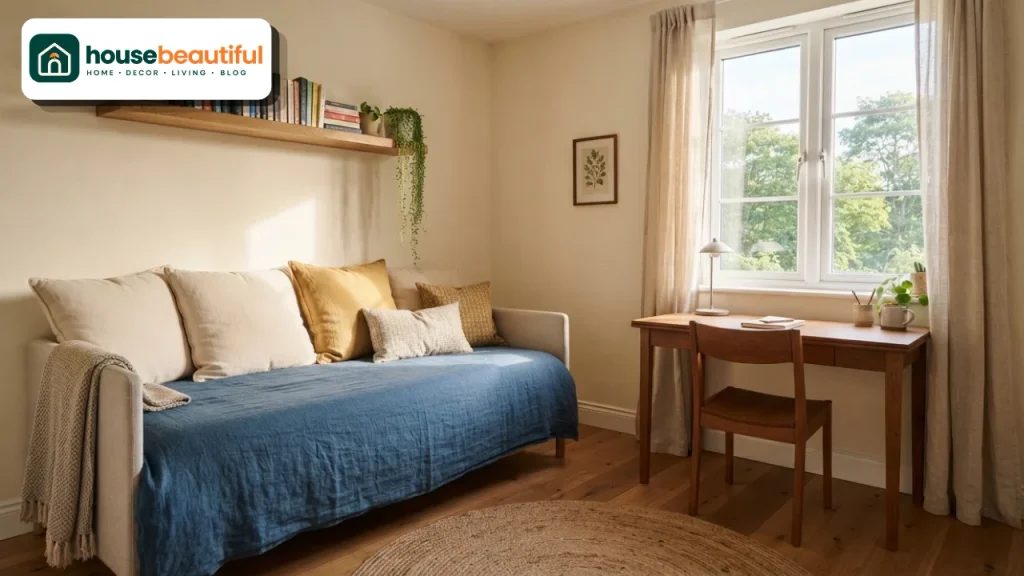
If the room is also a home office, craft room or den, one twin bed may be all you need. Push it against the wall with plenty of cushions so it doubles as a sofa during the day. Our home office ideas can help you plan the work side of the room.
25 Ideas for a Guest Room With Twin Beds
Make It Feel Grown-Up
Choose upholstered headboards. Linen, velvet, or boucle headboards instantly make twin beds look more like a hotel and less like a dorm.
Lean into symmetry. Matching beds, matching bedding, and matching lamps create a calm, intentional look. This is the simplest way to make two twins look designed.
Use one oversized headboard. Run a single wide upholstered panel behind both beds. It ties them together and makes a strong focal point.
Pick adult bedding. Crisp white or soft neutral linens, quilts, and a few textured cushions. Skip bright cartoon prints unless the room is mainly for kids.
Add a canopy or four-poster frames. A pair of simple four-poster twins adds height and drama, especially in rooms with tall ceilings.
Play With Color and Pattern
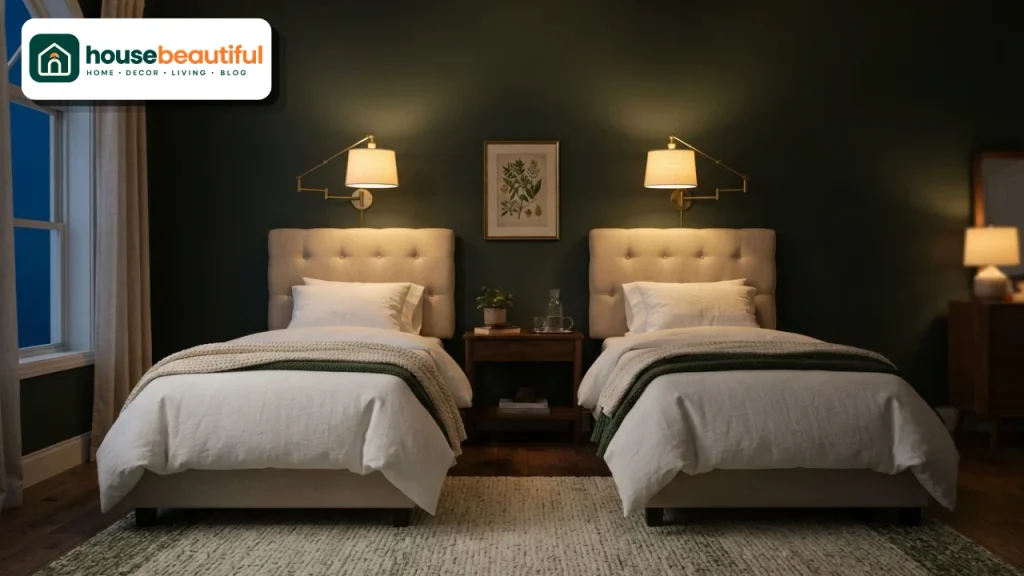
Paint the walls a cozy color. Soft sage, warm terracotta, muted blue,e or deep green can make a guest room feel like a retreat.
Color-drench the room. Paint the walls, trim and ceiling the same color for a wrapped, cozy feel.
Mix patterns carefully. Use one pattern on the bedding, a second on the curtains,ns and a third, smaller one on cushions, all in the same color family.
Use wallpaper behind the beds. A floral or striped wallpaper on the headboard wall adds personality without overwhelming the room.
Try contrasting bedding. For a fun twist, make one bed in one color and the other in a coordinating shade. It works especially well in a kids’ or teens’ room.
Save Space in Small Rooms
Use a daybed. A twin daybed works as a sofa by day and a bed by night. It’s perfect for a home office or reading room.
Add a trundle. A trundle bed hides a second twin mattress underneath the first. Pull it out when needed, and the room stays open the rest of the time.
Go vertical with bunks or a loft. Bunk beds or a loft bed fit two sleepers into half the floor space. They’re best for younger guests.
Choose storage beds. Beds with drawers underneath hold spare linens, pillows and towels, so you don’t need a separate dresser.
Mount wall lights. Swing-arm sconces or plug-in wall lights free up nightstand space, which matters when the gap between beds is small.
For more space-saving tricks, see our small bedroom ideas.
Make Guests Comfortable
Buy good mattresses. A medium-firm mattress suits most sleepers. Add a mattress topper for extra comfort.
Offer layered bedding. A sheet, a light blanket,ket and a duvet let each guest adjust for temperature. Keep an extra throw at the foot of each bed.
Provide two pillow types. Give each guest one firmer and one softer pillow, so they can choose.
Hang blackout curtains. Guests sleep better in a dark room, especially if they’re jet-lagged or on a different schedule.
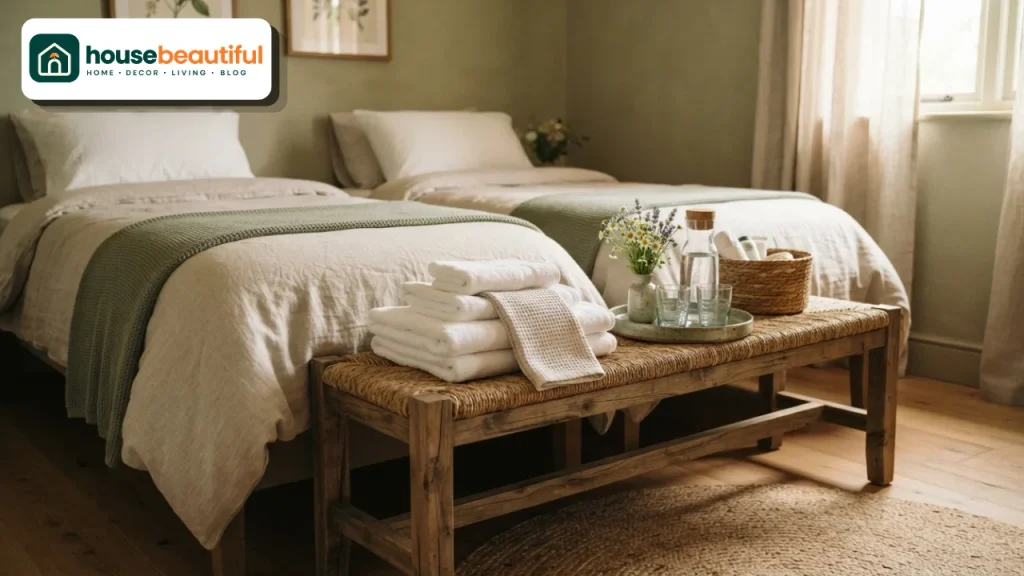
Add a luggage rack or bench. Guests need somewhere to put a suitcase that isn’t the bed or the floor. A bench at the foot of each bed works too.
Add Thoughtful Details
Clear closet space. Leave empty hangers and a few empty drawers so guests can unpack.
Set out a welcome tray. Water, glasses, a small snack,k and the Wi-Fi password on a card make guests feel cared for.
Add a mirror. A full-length mirror on the back of the door or a wall is something every guest uses.
Plan outlets and chargers. Put a charging spot near each bed, either a nightstand with built-in USB or a power strip tucked behind it.
Add a personal touch. Fresh flowers, a few books, a framed prin,t or a small plant make the room feel lived in and loved.
Choosing the Right Headboards and Frames
Headboards do more for twin beds than almost anything else. They define each bed and make the room look finished.
Upholstered headboards: soft, comfortable for reading in bed, and very hotel-like.
Wooden headboards: warm and classic. Cane or rattan headboards add a light, relaxed feel.
Metal frames: a vintage brass or black iron frame adds character, especially in farmhouse or traditional rooms.
Painted or wallpapered headboards: paint a shape on the wall behind each bed, or use a panel of wallpaper. It’s cheap and easy to change.
For more design options, see our headboard ideas.
Bedding Tips for Twin Beds
Twin bedding is easy to find and usually costs less than queen or king sets. A few tips help it look polished:
Buy matching sets in twos. It’s easier to keep both beds looking identical.
Use a quilt or coverlet. It looks neat and tailored, especially when the beds are side by side.
Tuck in tight. Hospital corners keep twin beds looking crisp.
Add a bed skirt. It hides storage bins and metal frames under the bed.
Check the size. Twin XL mattresses need twin XL sheets, which are 5 inches longer than regular twin sheets.
Keep at least two full sets of bedding for each bed, so you can wash one while the other is in use.
Storage in a Twin Bed Guest Room
A guest room doesn’t need as much storage as a bedroom used every day. But guests still need somewhere to put their things.
A small dresser with a couple of empty drawers.
Open hooks on the wall or the back of the door for coats and bags.
A clear section of the closet with hangers.
Under-bed bins for your own off-season items, kept out of the guests’ way.
A shelf above each bed for books, glasses,s and a phone.
If the room doubles as storage for your family, keep guest space and your own space clearly separate. Our bedroom storage ideas have more solutions.
Lighting for a Twin Bed Guest Room
Lighting can make a simple room feel warm and welcoming.
Overhead light: a ceiling fixture or pendant for general light.
Bedside lights: each guest needs their own reading light. Lamps, swing-arm scon,ces or clip-on lights all work.
Night light: a small plug-in light helps guests find their way in an unfamiliar room.
Dimmer switch: lets guests set the mood.
Use warm white bulbs (around 2700K) for a cozy feel. For more ideas, browse our bedroom lighting ideas.
Styling by Theme
A guest room with a twin bed setup can match almost any style.
Coastal. White and blue bedding, striped cushions, rattan headboards, and a sisal rug.
Farmhouse. White iron or wooden beds, plaid or quilted bedding, shiplap walls and vintage accents.
Modern. Low platform beds, crisp white linens, a single bold artwork and minimal decor.
Traditional. Turned-wood or four-poster beds, floral or toile fabrics, skirted beds and a classic rug.
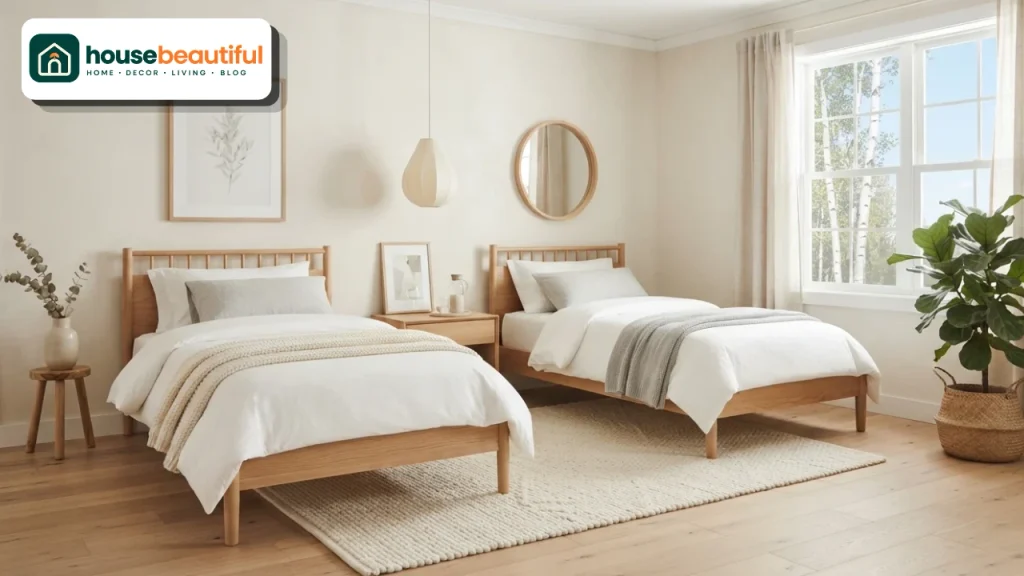
Scandinavian. Light wood frames, white and gray bedding, wool throws and simple shapes.
Boho. Rattan headboards, layered textiles, plants and warm earthy colors.
Pick one style and apply it to both beds. Consistency is what makes a twin room look designed.
Make the Guest Room Feel Like a Retreat
A few small touches go a long way.
- A comfortable chair in the corner for reading or putting on shoes.
- Fresh towels folded at the foot of each bed.
- A basket of basics: toothbrushes, toothpaste, shampoo, a phone charger, and earplugs.
- A small fan or heater so guests can control the temperature.
- Clear instructions for the Wi-Fi, TV, or thermostat.
If guests share a bathroom with your family, a caddy for their toiletries helps. If you’re thinking of adding a small private bathroom next to the guest room, our tiny 3/4 bathroom layout guide shows how little space it needs.
Twin Beds for Kids and Grandkids
Twin beds are the most practical choice when young guests visit often.
Use safety rails for very young children on raised beds.
Choose washable bedding in fun but not overly busy patterns.
Add a small play corner with a basket of books or toys.
Pick bunk beds only for kids old enough to climb safely, usually around six and older for the top bunk.
As the kids grow, the same twin beds can be restyled with more grown-up bedding, so they last for years.
Common Mistakes to Avoid
Squeezing two beds into too small a room. If there’s no room to walk, use one twin or a trundle.
No bedside light for one bed. Each guest needs their own light.
Mismatched beds. Two different styles side by side can look unplanned.
No surface for each guest. A shared nightstand works only if both guests can reach it.
Cheap mattresses. Guests notice an uncomfortable bed more than anything else.
Kid-only decor in an adult guest room. It makes adult guests feel out of place.
No space to unpack. A cluttered closet makes guests live out of a suitcase.
Guest Room With Twin Beds Checklist
Measure the room and choose one or two beds.
Decide on twin or twin XL.
Choose a layout: side by side, L-shaped, head-to-toe,e or opposite walls.
Leave 24 to 30 inches between beds and 30 inches at the foot.
Buy matching headboards or a single wide headboard.
Buy two sets of bedding per bed.
Add a reading light for each guest.
Clear closet and drawer space.
Add blackout curtains.
Add a luggage rack, mirror,r and charging spots.
Finish with personal touches.
FAQs:
What size room do you need for two twin beds?
A room of about 10 x 10 feet (3 x 3 m) is a comfortable minimum for two twin beds side by side. In an L-shaped layout, a room of about 9 x 9 feet can work.
How far apart should twin beds be?
Leave about 24 to 30 inches (61 to 76 cm) between twin beds. That’s enough space for a nightstand and for each guest to get in and out of bed comfortably.
Are twin beds good for adult guests?
Yes. A guest room with twin bed setup works well for adults. A twin is 38 inches wide, which is comfortable for one adult. Choose twin XL beds (80 inches long) if your guests are tall.
Can you turn two twin beds into a king?
Yes. Two twin XL mattresses pushed together equal a standard king (76 x 80 inches). Use a mattress connector or bridge pad and king-size sheets for comfort.
How do I make twin beds look grown-up?
Use upholstered or wooden headboards, neutral or tailored bedding, matching lamps and symmetrical styling. Avoid bright kids’ prints and themed decor.
Is a daybed a good option for a guest room?
Yes, especially in small or multipurpose rooms. A twin daybed works as a sofa during the day and a bed at night, and many come with a trundle for a second guest.