
Buying a new commode sounds simple until you stand in the showroom. One model is taller, another is longer, a third mounts on the wall, and the salesperson asks about your “rough-in.”
Get the size wrong, and the problems show up fast. The bowl hits the vanity, the door won’t close, or the new commode simply won’t line up with the drain.
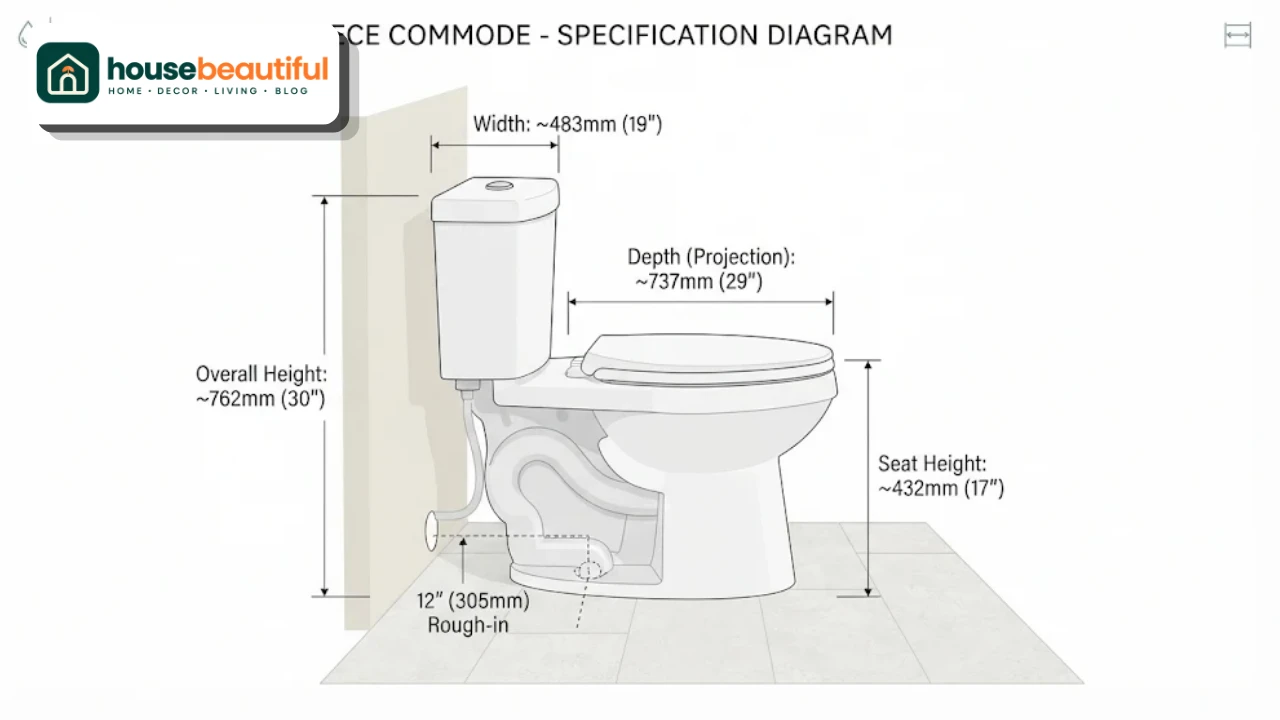
This guide explains what a standard commode looks like in real numbers: height, width, depth,h and rough-in, in both inches and centimeters.
You’ll also learn the main types, how to measure your bathroom,om and how to pick the right one for your family.
What Does “Standard Commode” Mean?
In most homes, “commode” simply means the toilet. The word is especially common in Pakistan, India, the Gulf, and parts of the southern United States.
In those places, people often say “commode” or “EWC” (European water closet) for the sit-down toilet, and “Indian” or “squat” for the floor-level pan.
A standard commode is the regular floor-mounted, sit-down toilet most homes use. It has a bowl, a seat, a tank or cistern for flushing water, and a drain connection in the floor or wall.
There’s a second meaning too. In hospitals and home care, a “commode” can be a portable chair with a bucket, used beside the bed. We cover that type later in the guide, in case that’s what you’re looking for.
Standard Commode Dimensions at a Glance
Commode sizes are not fixed by law, but most brands stay inside a common range. Here are the typical numbers.
| Measurement | Typical Range (inches) | Typical Range (cm) |
|---|---|---|
| Overall depth (front to wall) | 28–30 in | 71–76 cm |
| Overall width (widest point, usually the tank) | 18–20 in | 46–51 cm |
| Overall height (floor to top of tank) | 27–32 in | 69–81 cm |
| Seat height, standard | 14.5–16 in | 37–41 cm |
| Seat height, comfort or chair height | 17–19 in | 43–48 cm |
| Rough-in (wall to drain center) | 12 in (sometimes 10 or 14 in) | 30.5 cm (25 or 35.5 cm) |
| Bowl width | 14–15 in | 36–38 cm |
Compact models can be as shallow as 25 to 27 inches. Wall-hung commodes often stick out only about 20 to 22 inches from the wall, because the tank hides inside it.
Always check the exact spec sheet for any model you’re considering. A one-inch difference can matter in a small bathroom.
Commode Height: Standard vs Comfort Height
Height is the measurement people notice most, because you feel it every time you sit down.
Standard height commodes have a seat about 14.5 to 16 inches (37 to 41 cm) from the floor. This was the norm for decades. It suits children, shorter adults,lts and anyone who finds a lower seat more natural.
Comfort height, also called chair height or right height, puts the seat at about 17 to 19 inches (43 to 48 cm). That’s close to the height of a dining chair.
It’s easier to sit down on and stand up from, which helps taller people, older adults,s and anyone with knee, hip, or back problems.
Comfort height models are also the choice for accessible bathrooms. In the US, ADA guidelines call for a seat height of 17 to 19 inches.
Which should you choose? If adults with joint issues use the bathroom, choose comfort height. If young children use it most, standard height is easier for them.
For a family bathroom, many people pick comfort height and keep a small step stool for the kids.
Understanding Rough-In
Rough-in is the measurement that decides whether a commode will fit your existing plumbing. Many people never hear the term until they buy the wrong toilet.
For a floor-mounted commode, rough-in is the distance from the finished wall behind the toilet to the center of the drain (the flange) in the floor.
12 inches is the standard in most modern homes.
10 inches shows up in older homes and some tight bathrooms.
14 inches appears in some older homes too.
If you buy a 12-inch rough-in commode for a 10-inch drain, the tank will hit the wall. If you buy a 10-inch model for a 12-inch drain, you’ll have an awkward gap behind the tank.
S-Trap and P-Trap Commodes
In Pakistan, India,ia and many other countries, you’ll see commodes sold as S-trap or P-trap.
S-trap commodes drain straight down into the floor. They’re the most common choice for ground-floor bathrooms and new construction.
P-trap commodes drain backward into the wall. They’re useful on upper floors or when the drain pipe runs through the wall rather than the floor.
S-trap models are sold with set distances from the wall to the outlet, and these vary by brand. Check the outlet distance on the spec sheet and match it to your drain before you buy.
Bowl Shape: Round vs Elongated
The bowl shape changes both comfort and how much room the commode takes up.
Round bowls are about 16 to 16.5 inches from the seat bolts to the front edge. They’re shorter, so they save about 2 inches of floor space. That makes them good for powder rooms, small bathrooms,hrooms and kids’ bathrooms.
Elongated bowls are about 18 to 18.5 inches long. Most adults find them more comfortable, and they’re easier to keep clean. They’re the common choice in master and family bathrooms.
Compact elongated bowls give you the elongated shape in a round-bowl footprint. They’re a smart middle ground for tight spaces.
If space is tight, measure from the wall to the nearest obstacle in front of the toilet. You need at least 21 inches of clear space in front of the bowl, and more is better.
Types of Commodes
The standard commode comes in several styles. Each has its own siz, look, loo,k and price.
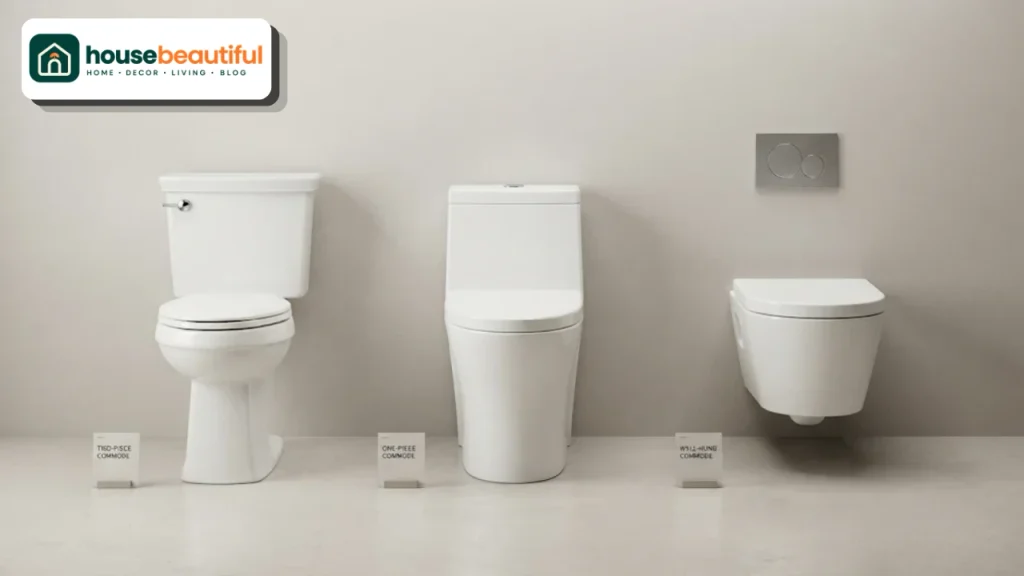
Two-Piece Commode
The tank and bowl are separate pieces bolted together. This is the most common and usually the cheapest type. It’s easy to find replacement parts, and it’s heavy but manageable to install.
One-Piece Commode
The tank and bowl are molded as a single unit. It has fewer seams, so it’s easier to clean and looks sleeker. One-piece models usually cost more and are heavier to carry.
Wall-Hung Commode
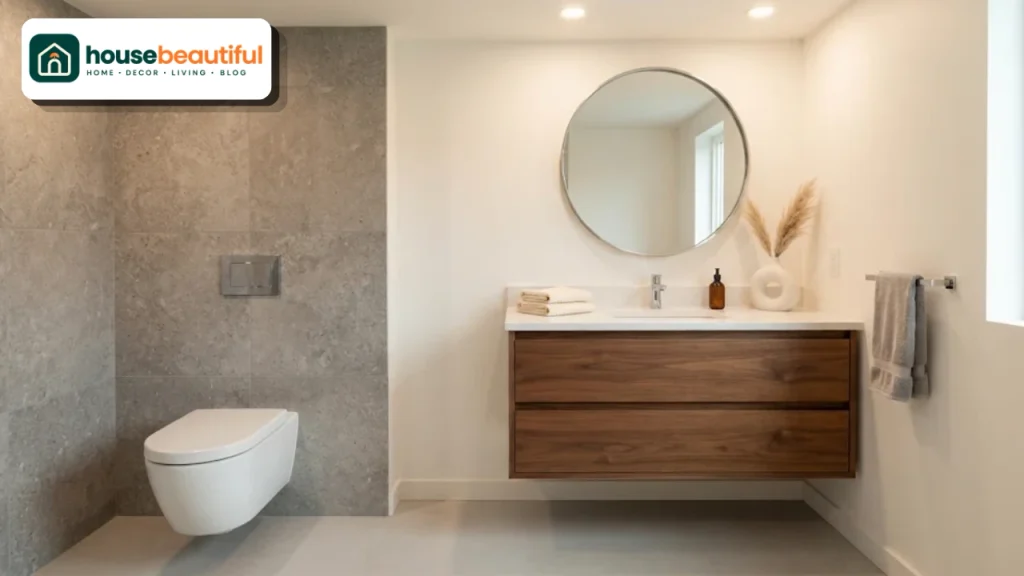
The bowl mounts on the wall, and the tank, or concealed cistern, sits inside the wall on a steel frame. Only the bowl and the flush plate show. Wall-hung
commodes save 6 to 9 inches of depth, leave the floor clear for easy cleaning, and let you set the seat height during installation. They cost more to install and need a thicker wall.
Back-to-Wall Commode
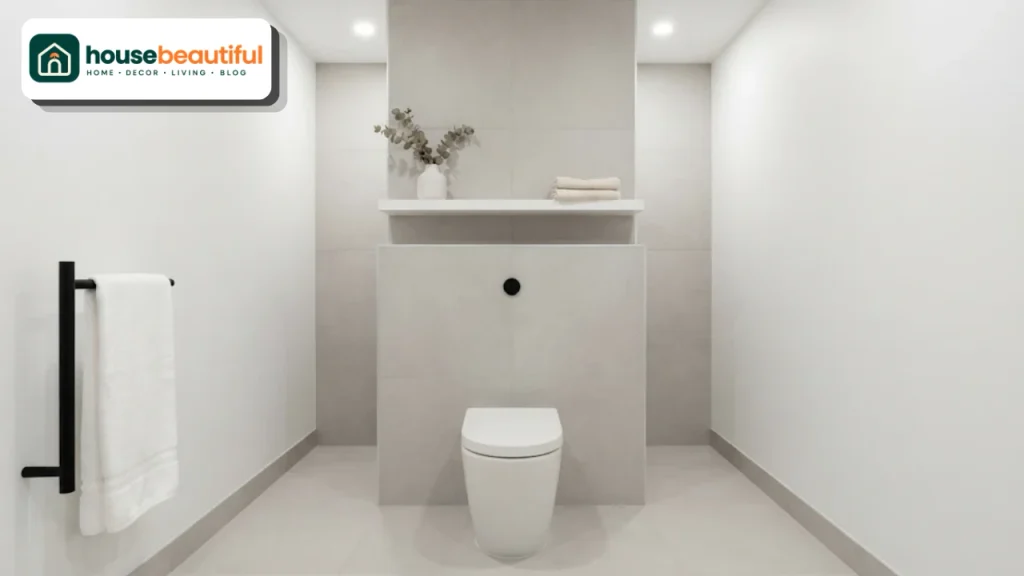
This is a floor-standing bowl that sits flush against the wall, with the cistern hidden inside the wall or a cabinet. It gives the clean look of a wall-hung model without needing a steel frame.
Smart Commode
Smart commodes include features such as a heated seat, built-in bidet washing, warm-air drying, automatic flushing, and a night light.
They need an electrical outlet nearby. Sizes are similar to one-piece models, but check the depth, since some are longer.
Indian or Squat Pan
Squat pans sit at floor level. They’re still common in South Asian homes, especially in older houses and for elderly family members who prefer them.
They take less space than a sit-down commode but need a recessed floor. Some homes install both: a squat pan in one bathroom and a sit-down commode in another.
How Much Space Does a Commode Need?
A commode fits only if the room around it works. These clearances come from common building codes and the National Kitchen & Bath Association (NKBA).
Side clearance: at least 15 inches (38 cm) from the center of the commode to any wall or fixture. NKBA recommends 18 inches.
Total width: at least 30 inches (76 cm) of space for the commode itself.
Front clearance: at least 21 inches (53 cm) in front of the bowl. 30 inches is more comfortable.
Toilet room: if the commode sits in its own room, plan for at least 30 inches wide and 60 inches deep (76 x 152 cm).
In a small bathroom, these numbers often decide where everything else goes. If you’re planning a compact room, our tiny 3/4 bathroom layout guide shows how to fit a commode, shower, and sink into very small spaces.
For a long, narrow room, see how the commode fits between the vanity and shower in our 5 x 10 bathroom layout guide.
How to Measure for a New Commode
You only need a tape measure and about five minutes. Do this before you shop.
Measure the rough-in. For a floor-mounted commode, measure from the finished wall (not the baseboard) to the center of the bolt caps on either side of the base. That’s your rough-in. It’s usually 12 inches.
Measure the available depth. Measure from the wall to the nearest obstacle in front of the commode, such as a vanity, a tub,b or the door swing. Subtract 21 inches for clearance. What’s left is the maximum bowl depth you can use.
Measure the width. Measure from the center of the drain to the nearest wall or fixture on each side. Each side should be at least 15 inches.
Check the height. If the commode sits under a window or shelf, measure from the floor to the bottom of it, so the tank fits underneath.
Note the water supply. Check where the water line comes out of the wall, so it lines up with the new tank’s inlet.
Write these numbers down and bring them with you. Compare them to the spec sheet of every model you consider.
Flush Systems and Water Use
Modern commodes use much less water than older models.
Single flush: one button or lever, usually 1.28 to 1.6 gallons (about 4.8 to 6 liters) per flush in newer models.
Dual flush: two buttons, one for a light flush and one for a full flush. A common split is about 3 and 6 liters. Dual flush saves water and is popular in South Asia and Europe.
Pressure-assist: uses air pressure for a strong flush. It’s louder and more common in commercial buildings.
In the US, the federal maximum for new toilets is 1.6 gallons per flush. WaterSense-labeled models use 1.28 gallons or less.
If water supply is limited where you live, a dual-flush commode is a good choice. It can save a lot of water over a year.
Choosing a Commode for Different Bathrooms
Small bathroom or powder room. Choose a round or compact elongated bowl, or a wall-hung model. A shallow depth gives you more room in front. For more space-saving ideas, see our small bathroom ideas.
Family bathroom. A two-piece elongated commode at comfort height is a practical, budget-friendly choice. Add a soft-close seat so lids don’t slam.
Master bathroom. A one-piece or wall-hung commode looks clean and modern. Many people put it in a separate toilet room. Our master bath floor plan guide shows where it fits best.
Bathroom for elderly family members. Choose comfort height, an elongated bowl, and space for grab bars on both sides. A wall-hung model can be set at the exact height that works best.
Kids’ bathroom. Standard height or a step stool, a round bowl,l and a soft-close seat.
Medical Commodes: The Other “Standard Commode”
If you’re shopping for a family member who has trouble reaching the bathroom, you may be looking for a medical commode instead.
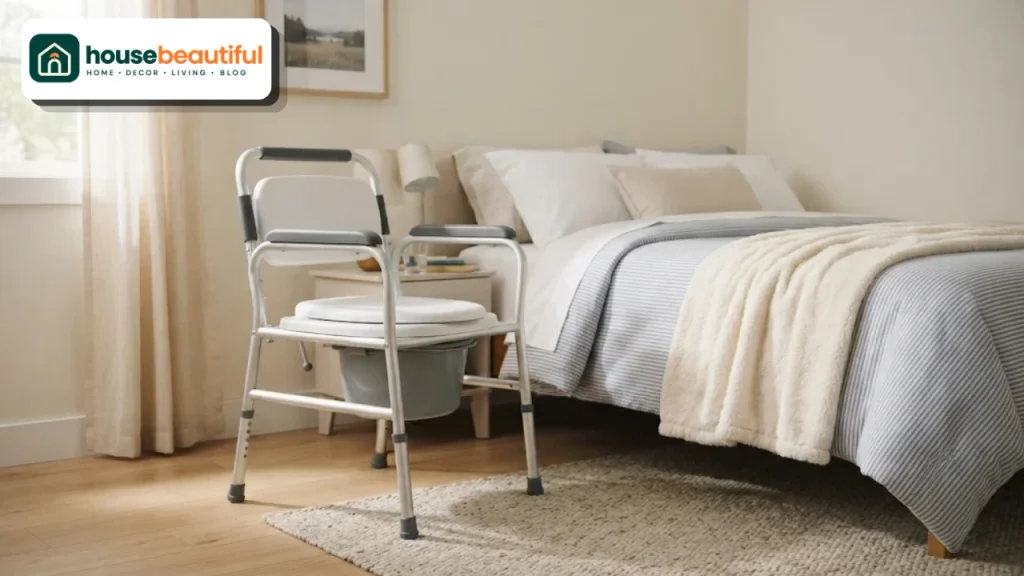
A medical commode is a portable chair with a seat, armres,ts and a removable bucket or pail. It can be placed beside the bed or carried to another room.
The common types are:
Standard bedside commode: a steel or aluminum frame with fixed arms. Most standard models support up to about 300 to 350 pounds (136 to 159 kg).
3-in-1 commode: works as a bedside commode, a raised toilet seat over a regular commode, or a safety frame with arms.
Drop-arm commode: the arms fold down, so a person can slide across from a bed or wheelchair.
Bariatric commode: a wider, stronger frame that supports 500 pounds (227 kg) or more.
Shower commode chair: a waterproof chair on wheels that can roll into the shower and over the toilet.
Most medical commodes have adjustable legs, so the seat can be set at different heights. Seat widths vary by model.
Always check the weight capacity and the seat height range before buying, and ask a doctor, nurse,rse or occupational therapist which type is safest for the person using it.
How Much Does a Commode Cost?
Prices vary by brand, ,type and country, but here’s a general picture:
Basic two-piece commode: the most affordable type.
One-piece commode: usually costs more than two-piece models from the same brand.
Wall-hung commode: the bowl may cost about the same as a one-piece, but the concealed cistern and frame add to the total.
Smart commode: the most expensive, often several times the price of a basic model.
Don’t forget installation. Replacing a commode with the same rough-in is a simple job for a plumber. Moving the drain, switching from an S-trap to a P-trap, or installing a wall-hung frame costs much more.
Matching the Commode to Your Bathroom Style
A commode rarely gets much design attention, but it’s one of the largest pieces in the room.
Modern bathrooms: a one-piece or wall-hung commode with a slim, square-edged seat and a concealed flush plate.
Classic bathrooms: a two-piece commode with a traditional tank and a chrome or brass lever.
Minimal bathrooms: a back-to-wall or wall-hung commode, with the cistern hidden behind tile.
White is the most common color by far, because it suits every style and matches most sinks and tubs. Colored commodes in black, gra,y or soft pastels can look striking, but they’re harder to replace and harder to match later.
Coordinate the commode with your vanity and tile. For ideas, browse our bathroom vanity ideas.
Commode Seats: Sizes and Fit
The seat is easy to forget, but it affects comfort every day. Many commodes come with a seat, while others sell it separately.
Seats come in two main shapes that match the bowl: round and elongated. A round seat will not fit an elongated bowl properly, and an elongated seat will overhang a round bowl. Check the bowl shape before you order a replacement.
Most seats attach with two bolts set about 5.5 inches (14 cm) apart. That spacing is close to universal on a standard commode, which makes replacement seats easy to find.
Look for these features:
Soft-close hinges that stop the lid from slamming.
Quick-release hinges that let you lift the seat off for cleaning.
Thicker plastic or wood for a sturdier feel.
Raised seats that add 2 to 4 inches of height for older users.
Installation Basics
Replacing a commode with the same type and rough-in is a common half-day job. The plumber shuts off the water, removes the old unit, scrapes off the old wax ring or seal, sets the new commode on a fresh seal, tightens the bol,ts and reconnects the water line.
A few points help it go smoothly. Make sure the floor is level, since a rocking commode will leak over time. Replace the flexible supply hose instead of reusing the old one.
Seal the base with a thin bead of caulk or grout, but many plumbers leave a small gap at the back so a leak would show up quickly.
Common Mistakes When Buying a Commode
Not measuring the rough-in. The most common and most costly mistake.
Buying an elongated bowl for a tiny room. It can block the door or eat into front clearance.
Ignoring seat height. A low seat can be hard for older family members.
Forgetting the S-trap or P-trap type. The drain direction must match your plumbing.
Skipping the spec sheet. Every brand’s dimensions are slightly different.
Choosing on price alone. A cheap commode with a weak flush can mean frequent clogs.
Not planning for a smart toilet’s power. Smart commodes need a nearby outlet.
Quick Buying Checklist
Measure the rough-in or outlet distance.
Note S-trap or P-trap.
Measure available depth and width.
Choose seat height: standard or comfort.
Choose bowl shape: round, compact elongated, or elongated.
Choose type: two-piece, one-piece, wall-hung,g or back-to-wall.
Check the flush system and water use.
Confirm the seat is included and is soft-close.
Check the warranty and parts availability.
FAQs:
What is the standard size of a commode?
A standard commode is usually 28 to 30 inches (71 to 76 cm) deep, about 18 to 20 inches (46 to 51 cm) wide and 27 to 32 inches (69 to 81 cm) high, with a 12-inch (30.5 cm) rough-in. Exact sizes vary by brand.
What is the standard commode height?
The seat on a standard-height commode is about 14.5 to 16 inches (37 to 41 cm) from the floor. Comfort height commodes are taller, at 17 to 19 inches (43 to 48 cm).
Is comfort height better than standard height?
For most adults, yes. It’s easier to sit and stand, especially with knee or back issues. Standard height is better for young children and shorter people.
How do I know my rough-in size?
Measure from the finished wall behind the commode to the center of the bolts that hold it to the floor. Most homes measure 12 inches.
What is the difference between a commode and a toilet?
In everyday use, they mean the same thing: the sit-down fixture in a bathroom. In medical settings, “commode” can also mean a portable chair with a bucket used beside the bed.
How much space does a commode need?
For at least 30 inches (76 cm) of width, with 15 inches from the center to each side, and at least 21 inches (53 cm) of clear space in front.