
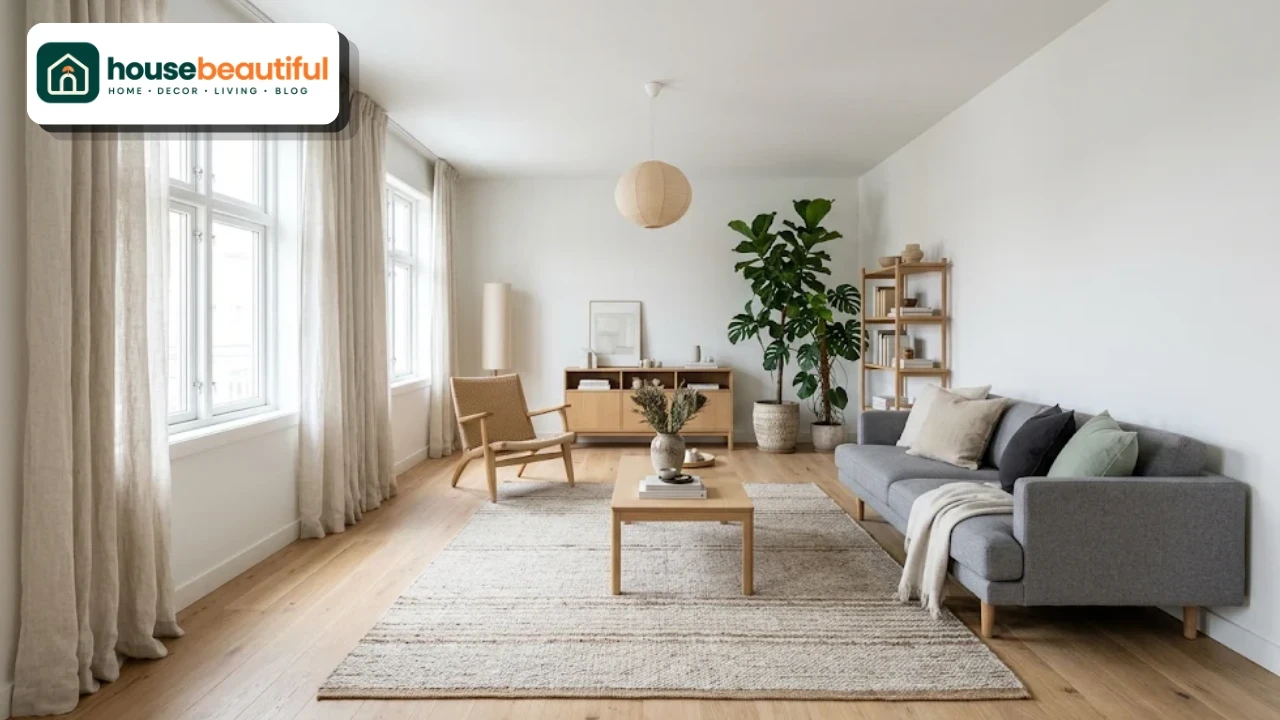
The living room is the face of the home. It is where guests are welcomed, where the family gathers in the evening and, in many homes, where important occasions are celebrated.
Yet many living rooms feel cramped, awkward, or cluttered, not because of the furniture itself but because of where it has been placed. A sofa blocks the walkway, the TV glares in the afternoon sun, or guests sit too far apart to talk comfortably.
This guide explains how to arrange a living room step by step. Known in Vietnamese as cách bố trí phòng khách, good arrangement combines practical spacing, comfortable seating, and, for many families, feng shui principles.
You’ll find the key measurements, eight sofa layouts, TV placement tips and ideas for apartments, tube houses and open-plan homes.
The Core Principles of Living Room Arrangement
Before moving any furniture, it helps to understand five principles that every good layout follows. They are the foundation of how to arrange a living room well, whatever its size.
Function first. Decide what the room is mainly for: receiving guests, watching TV, family time,e or all three. The answer shapes everything else.
One clear focal point. Seating should face or frame one main feature, such as a TV wall, a window with a view,ew or a decorative wall.
Comfortable conversation distance. Seats should be close enough for easy talking without raising your voice.
Free-flowing walkways. People should be able to walk through the room without squeezing past furniture or stepping over legs.
Balance and proportion. Furniture should suit the size of the room and be distributed so that one side doesn’t feel heavier than the other.
How to Arrange a Living Room Step by Step
Follow this process to plan your living room with confidence.
Measure the room
Measure the length and width of the room, the ceiling height, and the positions of doors, windows, sockets, air conditioners,s and any stairs. Note which way each door opens.
Draw a simple floor plan
Sketch the room to scale on paper or use a free online room planner. Mark the walkways from the entrance to other rooms.
Choose the focal point
Pick the feature the seating will face. In most Vietnamese and Asian homes,s this is the TV wall, but it might also be a large window, a skylight,t or a decorative feature wall.
Place the sofa first
The sofa is the largest piece, so it sets the layout. Usually it faces the focal point, with its back to a wall or floated in the room with space behind.
Add the coffee table and secondary seating
Place the coffee table in front of the sofa, then add armchairs, stools or a second sofa to complete the seating group.
Add storage, lighting and decor
Position the TV cabinet, shelves and display units, then add lamps, rugs, plants and art.
Test and adjust
Live with the arrangement for a few days. Walk through the room, sit in every seat, and adjust anything that feels awkward.
For a deeper planning method, see our living room furniture layout plan guide.
Spacing Rules You Should Know
These measurements make a living room comfortable to use.
| Element | Recommended distance |
|---|---|
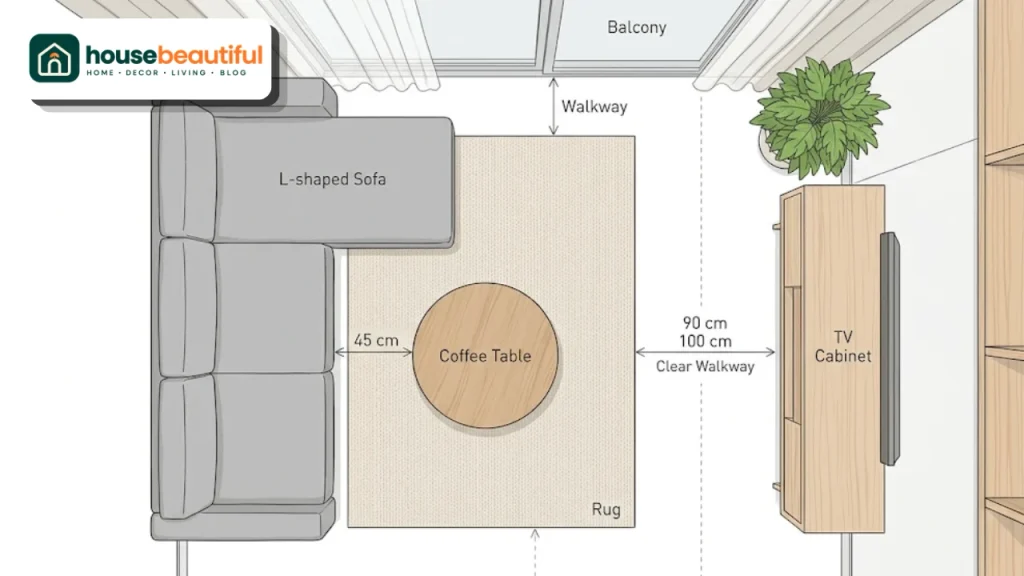
| Sofa to coffee table | 40–45 cm (16–18 in) |
| Main walkway | 75–90 cm (30–36 in) |
| Seats in a conversation group | Within 2.4–3 m (8–10 ft) |
| Sofa to TV (4K screen) | About 1–1.5 times the screen diagonal |
| TV center height | About 100–110 cm (40–43 in) from the floor |
| Rug edge to wall | 30–45 cm (12–18 in) |
| Coffee table length | About two-thirds of the sofa length |
Treat these as guidelines. Small apartments may need slightly tighter spacing, while larger rooms can be more generous.
8 Sofa Layouts and When to Use Them
Knowing how to arrange a living room largely comes down to choosing the right sofa layout.
Straight sofa facing the TV
A single sofa faces the TV, with the coffee table between them. It’s the simplest layout and suits most apartments.
L-shaped sofa
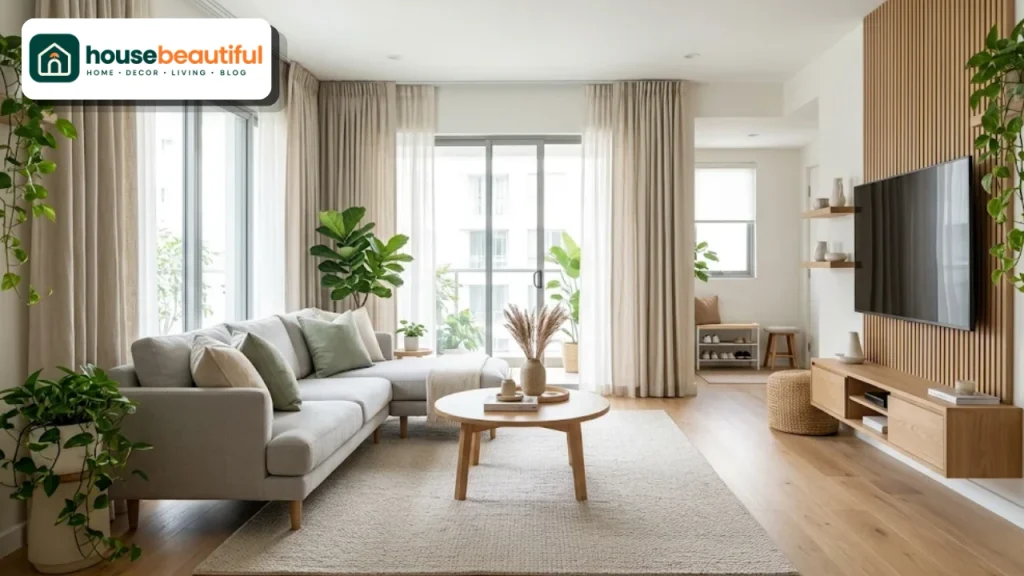
An L-shaped or corner sofa fits neatly into a corner and seats more people. It leaves the open side free for the walkway. It is one of the most popular choices in Vietnamese apartments.
U-shaped layout
Seating wraps three sides of the coffee table. It is ideal for large families and frequent guests, but it needs a spacious room.
Facing sofas
Two sofas face each other across a coffee table. This encourages conversation and suits formal reception rooms, but it is less comfortable for watching a TV placed at the side.
Sofa with two armchairs
A sofa faces the focal point with two armchairs opposite or at the sides. It is flexible and balanced, and suits medium rooms.
Angled or diagonal layout
Placing the sofa or chairs at an angle adds movement and can work well in irregular or square rooms.
Floating layout
The seating group sits in the middle of the room, away from the walls, anchored by a rug. This suits large rooms and open-plan spaces.
Traditional wooden sofa set
Many Vietnamese homes use a carved wooden sofa set (bộ bàn ghế gỗ) with a long sofa, armchair,s and a low table. Arrange it symmetrically facing the main door or the focal wall for a formal, welcoming look.
For more seating ideas, see our guide to living room seating arrangements.
Where to Place the TV
The TV is the main focal point in most living rooms, so its position matters.
Opposite the sofa. Place the TV directly opposite the main seating at a comfortable viewing distance.
Away from glare. Avoid placing the TV opposite a bright window or balcony door. If that’s unavoidable, use curtains or blinds.
At the right height. The center of the screen should be roughly at eye level when seated.
With hidden cables. Plan sockets and cable routes before mounting, so wires are hidden behind the TV cabinet or inside the wall.
A long, low TV cabinet with closed storage keeps devices tidy. For display and storage ideas around the TV, see our designs for a living room showcase.
How to Arrange a Living Room by Home Type
Apartments (chung cư)
Apartment living rooms are often compact and open to the kitchen or dining area.
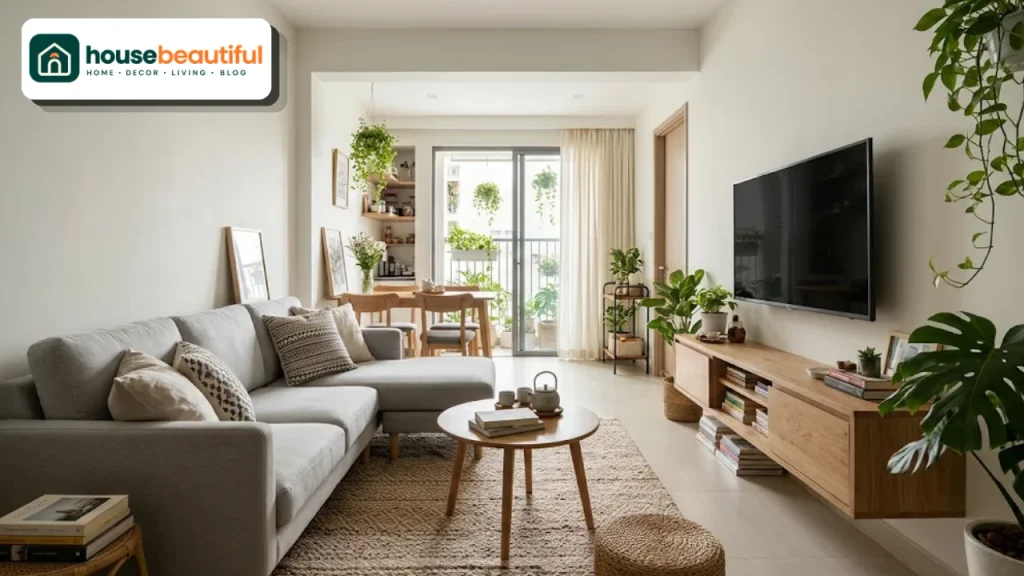
Choose an L-shaped or straight sofa, a compact coffee table,e and a wall-mounted TV. Keep furniture on legs to show more floor, and use light colors to make the space feel larger.
Use a rug and the back of the sofa to separate the living area from the dining area.
Tube houses (nhà ống)
Tube houses are long and narrow, often with the living room at the front and the motorbike parking area nearby.
Place the sofa along one long wall with the TV opposite, leaving a clear walkway along the other side. A low partition, shelf,f or screen can separate the living area from motorbike parking or the stairs.
Use a skylight or rear windows to bring light deep into the house, and keep the living room furniture compact so the path through the home stays clear. Our living room ideas for rectangular rooms work well in long, narrow tube houses.
Townhouses and villas
Larger homes allow a U-shaped or facing-sofa layout, a separate reading corner and a formal reception area. Use rugs and lighting to create zones in very large rooms.
Living room with kitchen (phòng khách liền bếp)
Open-plan living rooms combined with the kitchen are increasingly popular.
Use a kitchen island, bar counter, open shelving or the back of the sofa to divide the zones. Keep a consistent color palette so the two spaces feel connected, and make sure the cooker hood is powerful enough to keep cooking smells away from the seating area.
How to Arrange a Living Room by Room Shape
The shape of the room also changes the best layout.
Square rooms. A symmetrical layout works well: a sofa facing the TV with two armchairs at the sides, or facing sofas around a central coffee table. A round or square rug suits the shape.
Rectangular rooms. Place the sofa along a long wall or across the room, and keep one clear walkway. In long rooms, create two zones, such as seating and dining.
L-shaped rooms. Use one arm of the L for seating and the other for dining, reading or a work corner. Each zone gets its own rug and light.
Irregular rooms. Focus on the largest usable area for the seating group, and use awkward corners for plants, shelve,s or a reading chair.
Understanding how to arrange a living room around its shape helps you avoid wasted space.
Air Flow and Cooling
In warm, humid climates, arranging the living room for gooairflowow is just as important as appearance.
Avoid placing tall furniture in front of windows or blocking cross-ventilation between doors. Position the sofa where the air conditioner’s flow reaches it gently, rather than blowing directly onto seated guests.
Ceiling fans work best above the seating area. Keep electronics and heat-producing devices away from seating where possible.
Feng Shui Tips for Arranging a Living Room
Many Vietnamese families consider feng shui (phong thủy) when arranging the living room. These traditional principles also overlap with good design practice.
Sofa backed by a solid wall. In feng shui, a solid wall behind the sofa symbolizes support and stability. Practically, it also makes seating feel more secure.
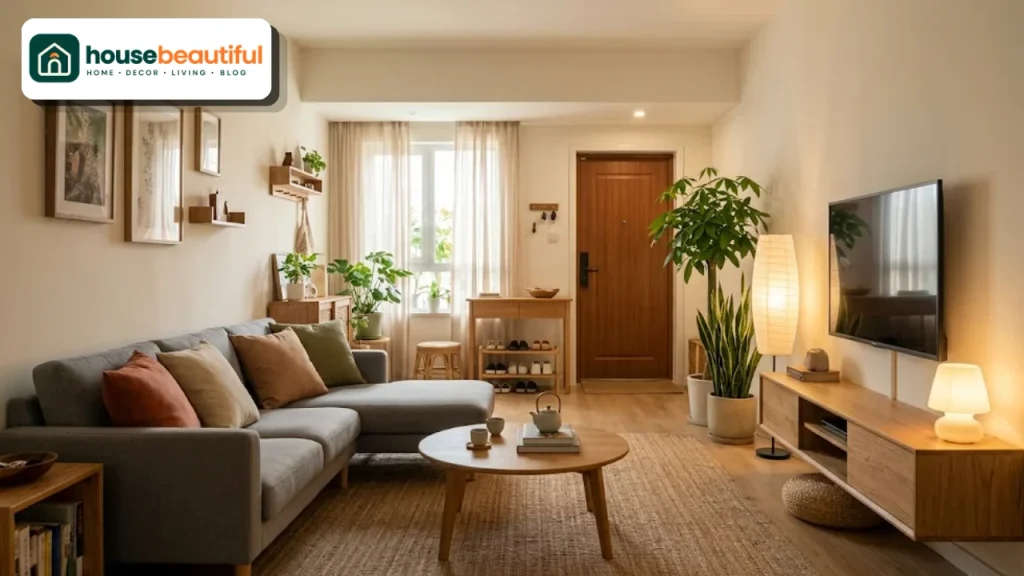
Clear entrance. Keep the area around the main door open and uncluttered, so energy and people can move in freely.
Don’t block the main door. Avoid placing large furniture directly in the path from the entrance.
Balance of elements. Combine wood, metal, earth, water and fire elements through furniture, decor, colors and plants.
Plants for vitality. Healthy green plants such as money trees, snake plants, or lucky bamboo are popular choices.
Good lighting. A bright, well-lit living room is believed to attract positive energy. It also makes the room feel welcoming.
Mirrors placed thoughtfully. Avoid placing a large mirror directly facing the main door.
Ancestor altar placement. In homes where the altar (bàn thờ) is in or near the living room, it is usually placed in a calm, elevated and respectful position, away from the TV and the main walkway.
Feng shui beliefs vary between practitioners and families, so treat these as traditional guidance and combine them with what works practically in your home.
Arranging a Small Living Room
Small living rooms need careful choices to feel open and comfortable. Here, how to arrange a living room is mostly about choosing smaller pieces and keeping the floor clear.
Choose a compact sofa or loveseat, armless chairs,s and a round or glass coffee table. Nesting tables and storage ottomans add flexibility.
Use wall-mounted shelves and a floating TV cabinet to free up floor space. Light colors, mirrors, and good lighting make the room feel larger.
Avoid oversized furniture and too many small decorative items. For more ideas, see our list of small living room ideas.
Arranging a Living Room With Children
Families with young children need a living room that is safe and easy to tidy.
Create a dedicated play corner with a soft rug and low shelves or storage baskets, so toys have a home. Choose rounded coffee tables and furniture with soft edges.
Secure tall cabinets and TVs to the wall to prevent tipping, and cover unused sockets. Choose washable sofa covers and stain-resistant rugs.
Arranging the Room for Guests
In Vietnamese culture, the living room is the main place for receiving guests, so it should feel welcoming and respectful.
Place the main seating so guests can see the entrance and face the host comfortably. A tea table at the center, with a tea set ready, is a traditional and practical touch.
Make sure there are enough seats for regular visitors, using stools, ottomans,s or a bench that can be moved in when needed. Keep personal clutter, such as shoes, bags,s and laundry, out of sight.
A neat console or shoe cabinet near the door gives guests a place to leave shoes and bags as they come in.
Preparing for Tết and Family Gatherings
During Tết and family celebrations, the living room often hosts many more people than usual.
Plan a flexible layout: move lightweight chairs and side tables to the edges, roll up a delicate rug and add floor cushions or a mat for extra seating. Clear the coffee table to make room for trays of candied fruit, tea and snacks.
Decorate with seasonal flowers such as peach blossom or apricot blossom, placed where they won’t block walkways. After the holiday, return the room to its everyday arrangement.
Knowing how to arrange a living room for both everyday use and special occasions makes the space far more practical.
Storage That Keeps the Room Tidy
Good storage is what keeps a well-arranged living room looking tidy.
Choose a TV cabinet with closed drawers for remotes, chargers, and documents. Add floating shelves or a display unit for books and decor.
Storage ottomans and coffee tables with drawers hide blankets, games and children’s toys. Baskets on open shelves keep small items organized.
In small apartments, use vertical space with tall, slim shelving rather than wide, low cabinets.
Rugs and Curtains
A rug defines the seating area and makes the room feel finished. Choose one large enough for at least the front legs of the sofa and chairs, typically 160 x 230 cm or 200 x 300 cm.
Curtains soften the room and control light and heat. Hang them high and wide to make windows look larger, and choose light, breathable fabrics for hot climates. Blackout linings help where the TV faces a bright window.
Lighting the Living Room
A well-lit living room uses several layers of light.
Ambient light. Ceiling lights, downlights,s or a statement chandelier provide overall brightness.
Task light. Floor and table lamps beside the sofa are useful for reading.
Accent light. LED strips behind the TV panel, in shelves, or under a false ceiling highlight decor and create atmosphere.
Make the most of natural light by keeping windows uncovered during the day and using light, airy curtains.
Choosing Colors and Materials
Light neutral walls, such as white, cream or soft grey, keep a living room bright and make furniture easy to change.
Add warmth with wood furniture, textured fabrics and plants. Use accent colors in cushions, rugs and art rather than on large surfaces.
In hot, humid climates, choose breathable fabrics such as linen and cotton, and furniture that is easy to clean.
Decor That Completes the Room
Once the furniture is in place, decor brings the room to life.
Hang art at eye level above the sofa or on the TV wall. Add a rug sized so the front legs of the sofa and chairs rest on it.
Group decorative items in odd numbers and leave empty space on shelves. Add plants in corners and beside windows to soften the room.
Rearranging on a Budget
You don’t need new furniture to improve your living room.
Start by moving what you have: turn the sofa to face a better focal point, pull it slightly away from the wall, or swap the positions of chairs. Remove one or two pieces that crowd the room.
Add a new rug, a few plants, new cushion covers, or a floor lamp. Small changes often make the biggest difference in how comfortable the room feels.
Common Mistakes to Avoid
Buying furniture before measuring. Oversized sofas are the most common mistake.
Pushing everything against the walls. This can leave a large empty middle and seats too far apart.
Blocking walkways. Make sure people can move freely between the entrance, seating and other rooms.
Placing the TV opposite a window. Glare makes watching uncomfortable.
Too many decorative items. Clutter makes a room feel smaller and harder to clean.
Ignoring lighting. A single ceiling light leaves the room flat and dim in the evening.
Final Checklist
Before you settle on your arrangement, check that:
The room has one clear focal point
The sofa is the right size for the space
Walkways are at least 75–90 cm wide
The coffee table is 40–45 cm from the sofa
The TV is at eye level and away from glare
Every seat has a surface nearby for drinks
Lighting includes ambient, task and accent sources
The entrance is clear and welcoming
Bringing It All Together
Learning how to arrange a living room is about balancing function, comfort and beauty. Start with measurements, choose a focal point, place the sofa first, keep walkways clear, and finish with lighting and decor.
Whether you live in an apartment, a narrow tube hous,e or a large villa, these principles will help you create a living room that welcomes guests and works for everyday family life.
FAQs:
What does “cách bố trí phòng khách” mean?
It is Vietnamese for “how to arrange a living room”, covering furniture placement, layout, spacin,g and often feng shui.
Where should the sofa be placed in a living room?
Usually facing the focal point, such as the TV wall, ideally with its back against a solid wall or floated with space behind.
How far should the sofa be from the coffee table?
About 40–45 cm (16–18 in).
How far should the sofa be from the TV?
For a 4K TV, about 1–1.5 times the screen diagonal.
What is the best sofa layout for an apartment?
An L-shaped or straight sofa facing a wall-mounted TV works best in most apartments.
How do I arrange a living room in a tube house?
Place the sofa along one long wall, the TV opposite, keep a clear walkway on the other sid,e and use a partition to separate it from parking or stairs.
What are basic feng shui rules for a living room?
Keep the entrance clear, place the sofa against a solid wall, use plants and good lighting, and avoid mirrors directly facing the main door.
How do I separate a living room from the kitchen?
Use a kitchen island, bar counter, open shelving or the back of the sofa as a divider.
How wide should walkways be?
At least 75–90 cm (30–36 in).
How can I make a small living room look bigger?
Use compact furniture on legs, light colors, mirrors, wall-mounted storage, and good lighting.