
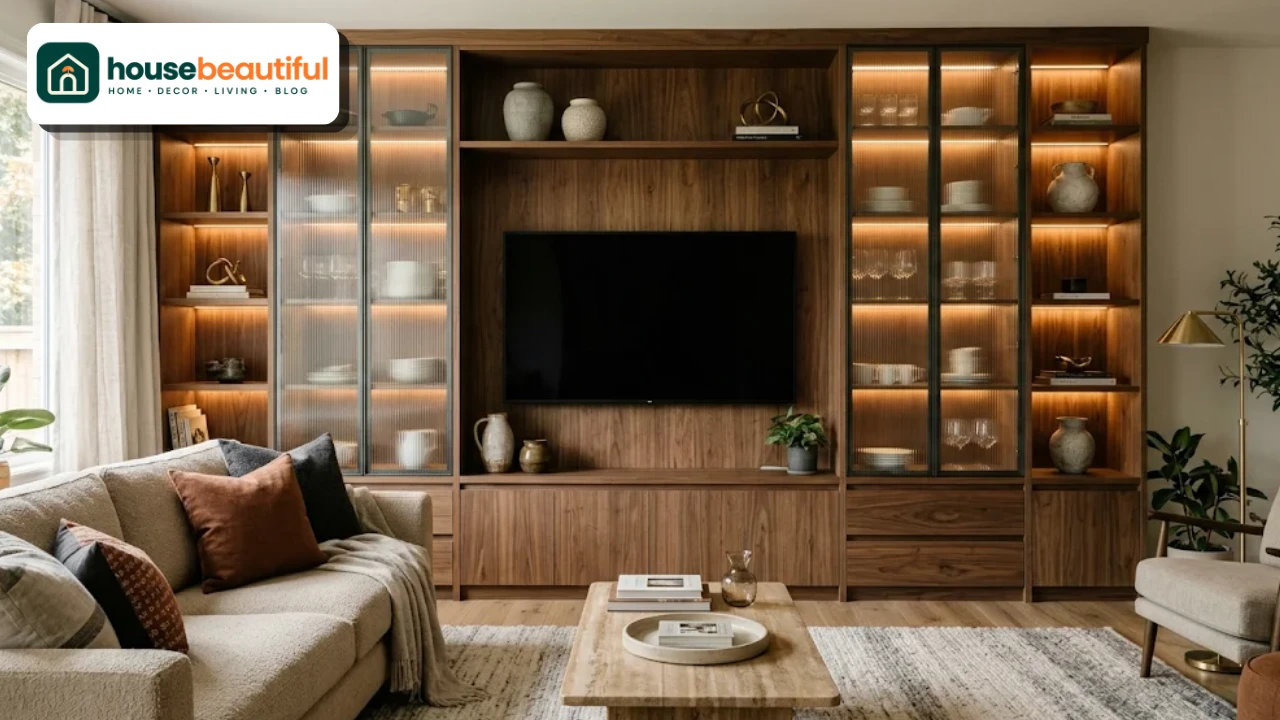
In many homes, the showcase is the proudest piece of furniture in the room. It holds the good crockery, wedding gifts, trophies, family photos, and treasured decor that guests notice the moment they sit down.
A well-chosen showcase brings order and personality to a living room. A poorly planned one becomes a dusty, crowded cabinet that makes the room feel smaller.
This guide covers 25 living room showcase designs, from glass and wooden units to TV walls and corner pieces.
You’ll also learn which materials last, what size to choose, where to place it, how to light it,t and how to style the shelves so it looks curated rather than cluttered.
What Is a Living Room Showcase?
A showcase is a display cabinet or wall unit designed to show off decorative items while keeping them protected and organized. It usually combines open or glass-fronted shelves for display with closed cabinets or drawers for storage.
In Pakistan and India, the word “showcase” covers everything from a tall glass crockery cabinet to a modern wall-mounted TV unit with display niches.
In other countries, the same piece might be called a display cabinet, vitrine, curio cabinet, or wall unit.
Whatever you call it, a good showcase does two jobs: it displays your best pieces and hides everyday clutter.
Why a Showcase Matters in the Living Room
The living room or drawing room is where guests are welcomed. A showcase gives you a dedicated place to display things that tell your family’s story.
It also adds storage without adding extra furniture. Documents, table linen, remote controls, chargers,rs and board games can all disappear behind closed doors.
Finally, a living room showcase can become the room’s focal point, balancing the sofa, TV and other furniture.
Types of Living Room Showcases
Before looking at designs, decide which type suits your room.
| Type | Best for | Watch out for |
|---|---|---|
| Freestanding cabinet | Renters, flexible layouts | Takes floor space, needs anchoring |
| Wall-mounted unit | Small rooms, modern homes | Needs strong walls and fixings |
| Built-in showcase | Custom fit, maximum storage | Permanent, higher cost |
| TV showcase | Combining media and display | Cable planning needed |
| Corner showcase | Unused corners, small rooms | Limited shelf depth |
| Partition showcase | Open-plan rooms | Must look good from both sides |
25 Living Room Showcase Designs
Use these designs for inspiration, then adapt the size, finish and layout to your room.
Glass showcases
Full-height glass showcase. A tall cabinet with glass doors and glass shelves feels light and elegant. It’s ideal for crockery, crystal and silverware.
Tempered glass shutters with wooden frame. Wooden frames add warmth, while toughened glass protects items from dust and keeps them visible.
Frosted or fluted glass showcase. Fluted or reeded glass blurs the contents slightly, hiding mismatched items while still letting light through.
Glass display with mirror back. A mirrored back panel doubles the visual depth and reflects light, making items sparkle.
Tinted glass with black frame. Smoked or bronze glass with slim black metal frames gives a sleek, modern look.
Wooden showcases
Solid wood classic cabinet. A sheesham, oak,k or walnut showcase with carved details suits traditional drawing rooms and lasts for decades.
Minimal wooden wall unit. Flat panels, hidden handles, and a light oak or walnut finish create a calm, Scandinavian-style showcase.
Open wooden shelving with closed base. Open shelves on top for books and decor, with closed cabinets below for storage.
Wooden ladder showcase. A leaning shelf unit that narrows toward the top, perfect for small rooms and plants.
Hexagon or geometric wall shelves. Honeycomb or geometric wooden shelves add a playful, artistic touch.
TV showcases
TV wall with side display towers. A low TV console flanked by tall display cabinets creates a balanced, built-in look.
TV panel with floating shelves. A textured or wooden backing panel behind the TV, with floating shelves for decor beside it.
L-shaped TV showcase. A low console that turns up one side of the wall saves space while providing display shelves.
Hidden TV showcase. Sliding or folding doors conceal the TV when not in use, keeping the room formal for guests.
Full-wall media unit. A floor-to-ceiling unit around the TV with open niches, closed cabinets, and integrated lighting.
Crockery showcases
Glass-front crockery cabinet. A classic for dining-cum-living rooms. Display plates and cups behind glass, with drawers below for cutlery and linen.
Sideboard with hutch. A low sideboard topped with a glass-fronted hutch holds crockery and doubles as a serving surface.
Crockery showcase with bar unit. Add a section for glasses and trays, or a tea and coffee station.
Space-saving showcases
Corner showcase. A triangular or L-shaped unit uses an empty corner for display without blocking walls.
Wall niche showcase. Recessed niches built into the wall display decor without taking any floor space.
Floating wall cubes. Wall-mounted boxes in different sizes create a flexible display you can rearrange.
Showcase room divider. In open-plan homes, an open-backed showcase separates the living and dining areas while displaying items on both sides.
Statement showcases
Arched showcase. Arched niches or arched glass doors add softness and a touch of classic or Mughal-inspired architecture.
Lacquered or high-gloss unit. Glossy white, navy,y or emerald lacquer gives a luxurious, contemporary feel.
Backlit onyx or marble panel showcase. A backlit stone panel behind glass shelves makes a dramatic, hotel-style statement.
Current Showcase Trends
A few design directions are especially popular right now.
Fluted and reeded glass. It softens the look of the contents and adds texture.
Arches. Arched niches and doors bring a soft, architectural feel to both modern and traditional rooms.
Mixed materials. Wood with metal frames, stone tops or cane panels makes a showcase feel more custom.
Integrated lighting. Slim LED profiles built into shelves are now expected rather than optional.
Less clutter. Fewer, larger display pieces with plenty of empty space, rather than shelves packed edge to edge.
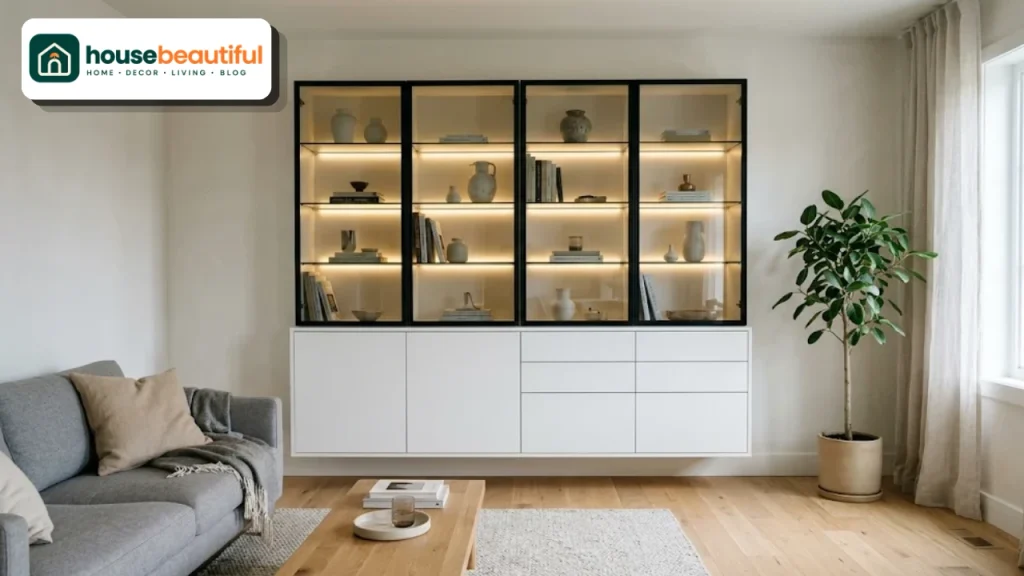
Choosing the Right Material
The material decides how long your showcase lasts and how it looks.
| Material | Pros | Cons | Relative cost |
|---|---|---|---|
| Solid wood (sheesham, oak, walnut) | Very durable, can be polished again | Heavy, expensive, can warp in humidity | High |
| Plywood with laminate | Strong, moisture-resistant, many finishes | Edges need good banding | Medium |
| Plywood with veneer | Real wood look, lighter than solid wood | Needs polish care | Medium–high |
| MDF with lacquer or paint | Smooth, ideal for glossy finishes | Swells with water, weaker screws | Low–medium |
| Particle board | Cheapest option | Less durable, sags under weight | Low |
| Glass (tempered) | Light, elegant, shows items | Needs cleaning, must be toughened | Medium |
| Metal frame | Slim, modern, strong | Can feel cold, may rust if untreated | Medium |
For most homes, marine or commercial plywood with laminate or veneer gives the best balance of strength, moisture resistan,ce and price. Always ask for tempered glass in shelves and doors for safety.
Sizes and Placement
Getting the size right is just as important as the design.
Standard dimensions
| Dimension | Typical range |
|---|---|
| Height (full-height unit) | 180–240 cm (6–8 ft) |
| Depth (display) | 30–40 cm (12–16 in) |
| Depth (TV console base) | 40–50 cm (16–20 in) |
| Shelf spacing | 30–40 cm (12–16 in) |
| Width | Fits the wall, leaving space at each side |
Shallow depths are fine for display; deeper bases suit storage and electronics.
Where to place it
The wall facing the sofa. The showcase becomes the focal point guests look at while seated.
Beside or around the TV. Combining the TV and showcase creates one organized media wall.
In the dining area. A crockery showcase near the dining table keeps serving pieces close.
In a corner or niche. Ideal for small rooms or awkward spaces.
Avoid placing glass showcases opposite strong direct sunlight, which causes glare and fades fabrics and photos inside.
Before committing to a spot, plan the whole room. Our living room furniture layout plan guide helps you measure and position furniture so the showcase doesn’t block walkways.
Choosing a Showcase by Room Size
Small living rooms
Choose a wall-mounted or corner showcase that keeps the floor clear. Glass doors and lighter finishes keep the unit from looking bulky.
Vertical designs draw the eye up and use height rather than width. For more ideas, see our list of small living room ideas.
Medium living rooms
A TV showcase with side display towers or a sideboard with hutch works well. Keep the unit in proportion with the sofa opposite.
Large living rooms and drawing rooms
A full-wall built-in showcase or a pair of matching cabinets makes a grand statement. You can also add a showcase partition to divide a long room into zones.
Showcases for a Dining-Cum-Living Room
Many apartments combine the living and dining areas in one room. Here, the showcase often does double duty.
A long sideboard with a glass hutch can sit between the two zones, holding crockery on the dining side and decor on the living side. An open-backed showcase partition separates the spaces while keeping light flowing.
Keep the finish consistent with the dining table or chairs so both zones feel connected. Place the showcase where it’s easy to reach plates and glasses when serving guests.
Combining a Showcase With Other Storage
A showcase works best as part of a wider storage plan.
Pair a tall display unit with a low closed cabinet nearby for items you don’t want on show. Add baskets or boxes on open shelves for small clutter like remotes and chargers.
If the TV wall already has storage, keep the showcase lighter and more decorative. If it’s the room’s only storage, choose a design with more closed cabinets and drawers than open shelves.
Matching the Showcase to Your Decor Style
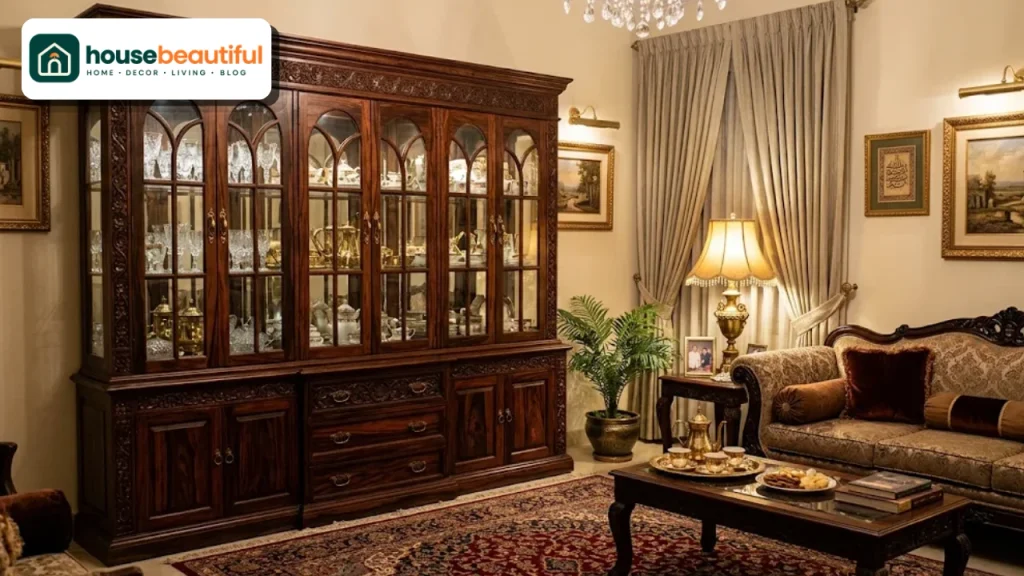
A living room showcase should look as if it belongs with the rest of the room.
Modern. Handle-less cabinets, glossy or matte lacquer, tinted glass, black or brass metal details, and LED strips.
Traditional. Carved solid wood, arched glass doors, brass handles and warm polish. This suits formal drawing rooms. Our drawing room interior design ideas show how to style this kind of space.
Scandinavian. Light oak, white panels, open shelves and simple, uncluttered displays.
Industrial. Black metal frames, reclaimed wood shelves, and open backs.
Contemporary Eastern. Arches, jaali (lattice) panels, brass inlay, and jewel-tone finishes blend tradition with modern lines.
Warm natural. Walnut or teak veneer with fluted glass and soft lighting. For more ideas, read our guide to wood living room decor.
Color and Finish Ideas
The finish can make the same design look classic, modern or luxurious.
Natural wood tones. Walnut, teak, and oak veneers bring warmth and suit almost any room.
Warm white and cream. Light finishes make a showcase blend into the wall and keep small rooms feeling open.
Two-tone combinations. A wood frame with white or grey shutters, or a dark base with a lighter top, adds depth.
Deep jewel tones. Emerald, navy, or burgundy lacquer turns the living room showcase into a bold statement piece.
Matte black with brass. Black panels with brass handles and trims feel dramatic and modern.
Textured finishes. Fluted panels, cane insert,s and jaali patterns add texture without needing extra decor.
Match the finish to at least one other element in the room, such as the coffee table, doors, or curtain color, so the showcase feels connected.
Hardware That Makes a Difference
Good hardware decides how smoothly a showcase works and how long it lasts.
Soft-close hinges stop doors from slamming and protect glass panels.
Telescopic or soft-close drawer channels let drawers open fully and close quietly.
Glass shelf supports should be metal, not plastic, and rated for the weight of crockery.
Handles and knobs affect the style: slim profiles for modern units, brass or antique finishes for traditional pieces, or push-to-open fittings for a handle-free look.
Locks are useful for cabinets that hold valuables or keep children away from fragile pieces.
Lighting Your Showcase
Good lighting turns an ordinary cabinet into a display.
LED profile strips. Recessed into the sides or front edge of shelves, they light items evenly and look clean.
Puck or spot lights. Small round lights at the top of each section highlight individual pieces.
Backlighting. LED strips behind a frosted panel or onyx sheet create a soft glow.
Battery or plug-in lights. Good for ready-made showcases where you can’t run wiring.
Use warm white light (2700–3000K) so wood and decor look inviting. Add a separate switch or a dimmer so you can turn the showcase into a soft evening light.
Plan wiring before the carpenter starts, so cables and drivers are hidden inside the unit.
How to Style Your Showcase Shelves
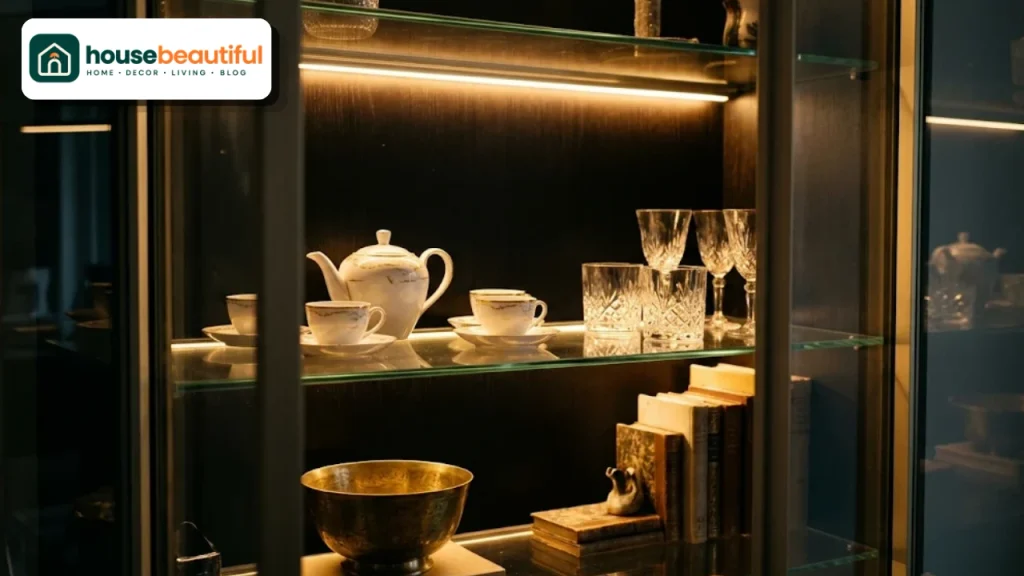
Styling decides whether a showcase looks curated or cluttered.
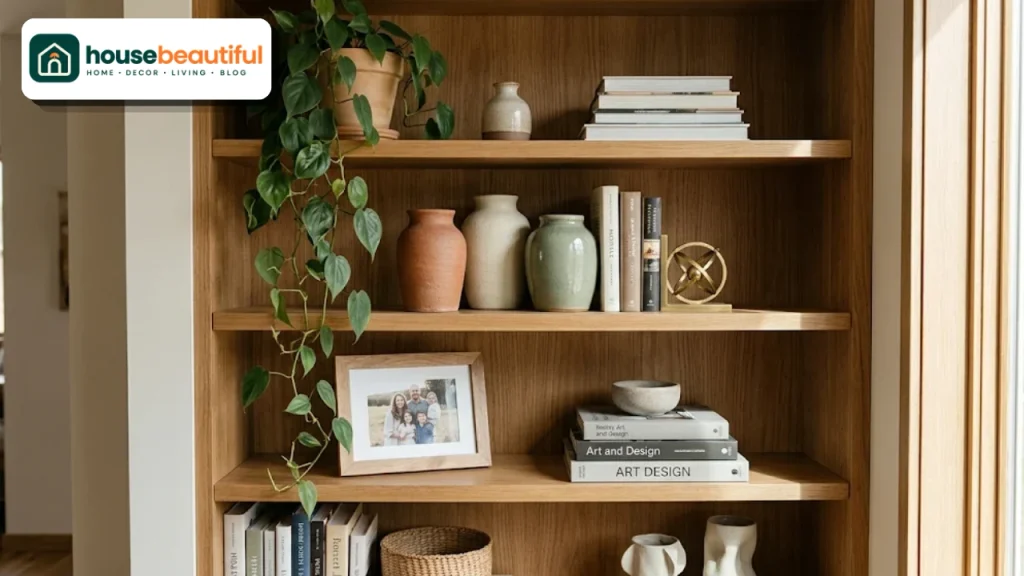
Edit first. Take everything out and only return the pieces you love. A full showcase rarely looks good.
Group in odd numbers. Arrange items in threes or fives for natural balance.
Vary heights. Mix tall vases, medium frames,es and small bowls on each shelf.
Repeat colors. Choose two or three colors and repeat them across shelves.
Leave breathing space. Empty space around objects helps each one stand out.
Mix materials. Combine glass, ceramic, wood, brass and greenery.
Add books. Stacks of books, horizontal and vertical, add structure and act as risers.
Rotate seasonally. Swap a few items for Eid, weddings,s or the seasons to keep the display fresh.
If you love displaying framed art and photos, our guide to a sitting room gallery shows how to extend the display onto the wall.
What to Display in a Living Room Showcase
- Fine crockery, tea sets and crystal glassware
- Brass, copper and silver pieces
- Handcrafted pottery, blue pottery and ceramics
- Family photos in matching frames
- Trophies, certificates and awards
- Travel souvenirs and collectibles
- Calligraphy pieces and small artworks
- Books and plants
Keep valuables and fragile heirlooms behind glass and everyday items on open shelves.
Showcases for Homes With Children
Children and glass shelves can be a worrying mix, but a few choices make a showcase safer.
Keep fragile items on the top shelves and behind locked glass doors. Use the lower cabinets for toys, games and books that children can reach.
Choose tempered glass, rounded edges and soft-close hinges. Anchor tall freestanding units to the wall with anti-tip brackets.
Avoid hanging heavy floating shelves where children climb or play. A sturdy, well-planned living room showcase can be both beautiful and family-friendly.
Ready-Made vs. Custom-Built Showcases
Ready-made showcases are quicker and often cheaper. They’re easy to move and good for renters. The downside is that sizes may not fit your wall perfectly.
Custom-built showcases made by a carpenter or interior company fit the space exactly and can include lighting, TV panels, and specific storage. They cost more and take longer, but they make the most of every inch.
Tips for Working With a Carpenter
Measure carefully. Note wall width, height, sockets,switchese,s and windows.
Share reference photos. Show the exact design, fini,sh and handles you want.
Ask for a drawing. A simple drawing with dimensions avoids misunderstandings.
Confirm materials in writing. Specify plywood grade, laminate or veneer brand and glass thickness.
Plan lighting and wiring. Decide where lights, switches, shelves, and the TV will go before work begins.
Check samples. See the laminate or polish sample in your room’s light.
Inspect before final payment. Check doors, drawers, alignment, and edges.
Budgeting for a Showcase
The cost depends on size, material, finish, glass and lighting.
To save money, choose plywood with laminate instead of solid wood, use open shelves for part of the unit, and add plug-in LED lights rather than full wiring.
Spend more on hinges, drawer channels, and glass. Cheap hardware is the most common reason a showcase starts to sag or squeak.
Secondhand solid wood showcases are often good value. A fresh polish and new handles can transform an old piece.
Caring for Your Showcase
Dust glass shelves and items regularly with a microfiber cloth. A light glass cleaner keeps doors sparkling.
Wipe wood and laminate with a soft, slightly damp cloth, then dry. Avoid harsh chemicals on polished finishes.
Re-polish solid wood every few years to restore its shine.
Check hinges and handles occasionally and tighten screws before they loosen further.
Anchor tall freestanding showcases to the wall, especially in homes with children, to prevent tipping.
Common Mistakes to Avoid
Overfilling shelves. Too many items make even a beautiful showcase look cluttered.
Wrong scale. A huge showcase overwhelms a small room; a tiny one looks lost on a large wall.
Ignoring lighting. Unlit glass cabinets look dark and dull in the evening.
Cheap glass. Untempered glass is unsafe and breaks easily.
Forgetting storage. A showcase with no closed storage soon ends up displaying clutter.
Blocking walkways or doors. Measure door swings and walking space before ordering.
Final Thoughts
The right living room showcase balances display and storage, suits the size of your room and reflects your style.
Choose a design that fits your wall, invest in good materials and hardware, light it well,l and style the shelves with restraint. A thoughtfully designed living room showcase will remain the heart of your living room for years.
FAQs:
What is a showcase in a living room?
A showcase is a display cabinet or wall unit that shows decorative items such as crockery, photos and collectibles, often with closed storage below.
Which material is best for a living room showcase?
Plywood with laminate or veneer offers the best balance of strength, moisture resistanc,e and price. Solid wood lasts longest but costs more.
What is the standard depth of a showcase?
Display sections are usually 30–40 cm deep, and TV console bases 40–50 cm deep.
Where should a showcase be placed in the living room?
On the wall facing the sofa, around the TV, in the dining area, or in an unused corner.
Should a showcase have glass doors?
Glass doors protect items from dust and keep them visible. Open shelves are better for books and plants.
How do I decorate a showcase?
Edit your items, group them in odd numbers, vary heights, repeat color,s and leave empty space between objects.
Can a showcase be combined with a TV unit?
Yes. A TV showcase with side display towers or floating shelves is one of the most popular designs.
What showcase suits a small living room?
A wall-mounted, corner or niche showcase with glass doors and a light finish.
How do I light a showcase?
Use warm white LED profile strips in shelves, puck lights at the top, or backlighting behind a frosted panel.
Is a custom showcase better than a ready-made one?
A custom showcase fits your space exactly and can include lighting and wiring, while a ready-made one is quicker, cheaper, and portable.