
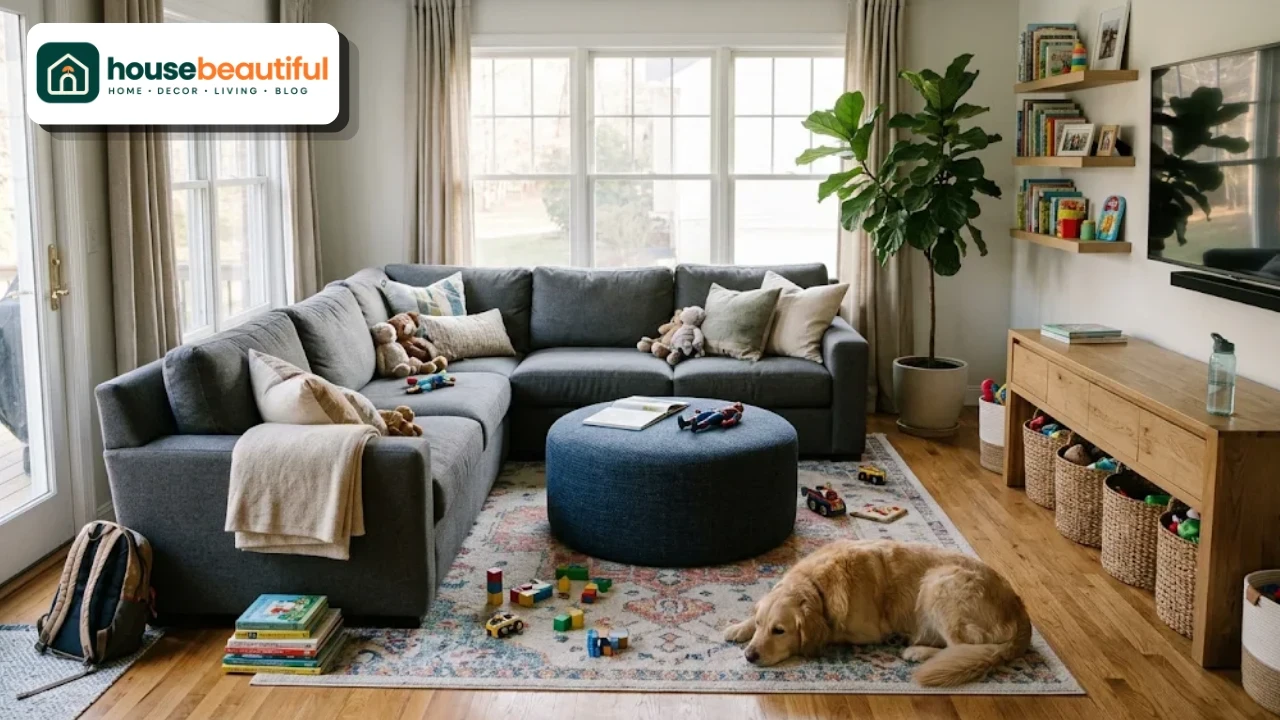
A well-furnished traditional living room has a quiet confidence. The sofa looks like it has always been there, the wood glows in lamplight, and every chair seems to invite a long conversation.
Getting that feeling right is less about buying antiques and more about choosing the right shapes, materials, and proportions.
The wrong pieces can make a room feel stiff, dar,k or dated. The right ones make it feel warm, elegant and lived-in.
This guide walks through the furniture traditional living room designs depend on, piece by piece.
You will learn what to look for in sofas, chairs, tables and storage, how to judge quality, how to arrange everything, and how to keep the look fresh rather than old-fashioned.
What Is Traditional Living Room Furniture?
Traditional furniture draws on classic European and early American designs, especially from the eighteenth and nineteenth centuries. Think English Georgian, French country and American colonial influences.
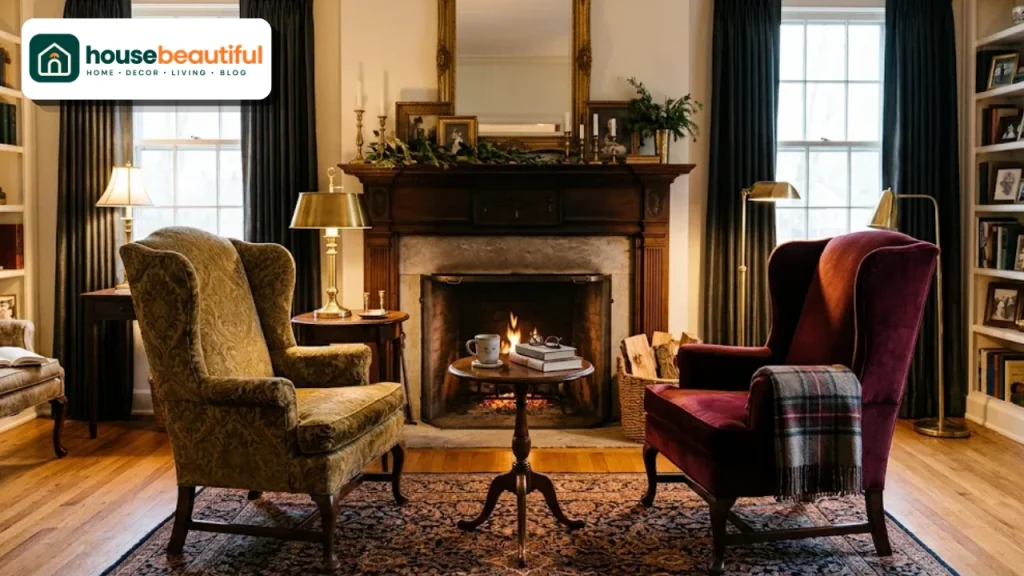
It is defined by graceful curves, carved details, rich wood finishe,s and comfortable upholstery. Pieces are often arranged in pairs and placed symmetrically around a focal point such as a fireplace.
Common signatures include rolled arms, turned or cabriole legs, tufting, nailhead trim, skirted bases and wood tones such as mahogany, cherry and walnut.
Traditional does not have to mean formal or fussy. The furniture traditional living room designers choose today is often softer and more relaxed than the period originals.
Many of today’s best traditional rooms are relaxed and comfortable, mixing classic pieces with soft textiles, books and family photographs.
Traditional Style Variations
Traditional furniture is a broad family. Knowing which branch you love makes shopping far easier.
English country. Relaxed and layered, with skirted sofas, chintz and floral fabrics, painted cabinets and plenty of cushions. It feels comfortable rather than grand.
French country and French provincial. Lighter carved frames, cabriole legs, bergere chairs and soft colors such as cream, blue and faded rose. Pieces often have a gently worn, painted finish.
American colonial and Federal. Cleaner lines, Windsor chairs, wingbacks, tall-case clocks and warm cherry or maple. It suits older homes and simple, symmetrical rooms.
Georgian and Regency. Elegant proportions, mahogany, brass details and refined upholstery. This is the most formal branch and suits drawing rooms and front parlors.
Victorian. Heavy carving, deep tufting, dark wood and rich fabrics. Used sparingly, one Victorian piece adds drama; a whole room of it can feel heavy.
Most homes blend two of these. The furniture traditional living room schemes rely on usually shares wood tones and a color palette, even when the styles come from different eras.
Traditional vs. Transitional Furniture
It is easy to confuse traditional and transitional pieces, so a quick comparison helps when shopping.
| Feature | Traditional | Transitional |
|---|---|---|
| Lines | Curved, detailed | Simplified classic shapes |
| Legs | Turned, carved, cabriole | Straight or lightly tapered |
| Wood finish | Rich, darker tones | Lighter or painted finishes |
| Upholstery | Patterns, velvet, damask | Solid neutrals, linen |
| Details | Tufting, nailheads, skirts | Minimal ornament |
| Mood | Elegant, warm, classic | Calm, modern, understated |
If you love traditional style but want a lighter feel, you can mix in a few transitional pieces. Our guide to the classic contemporary living room explains how to blend the two.
The Sofa: The Heart of a Traditional Living Room
The sofa sets the tone for the whole room. These classic shapes are the foundation of most traditional living rooms.
Chesterfield
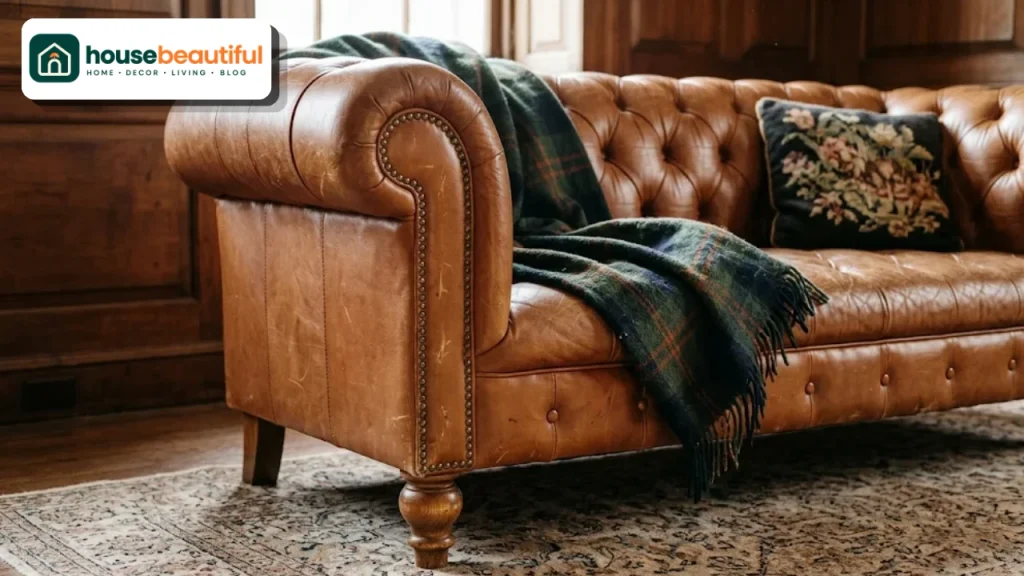
The Chesterfield is instantly recognizable, with deep button tufting, rolled arms the same height as the bac,k and often nailhead trim. In leather it feels like a gentleman’s club; in velvet or linen it becomes softer and more elegant.
Camelback sofa
A camelback sofa has a back that rises in a gentle hump, usually with rolled arms and exposed wooden legs. It is graceful and formal, ideal for a drawing room or a symmetrical layout around a fireplace.
Lawson and rolled-arm sofas
A Lawson sofa has arms set lower than the back and loose back cushions, making it more relaxed. Classic rolled-arm sofas with a tight or loose back are among the most versatile traditional pieces.
Skirted sofas
A fabric skirt hides the legs and gives a soft, cottage-like look. Skirted sofas suit English country and relaxed traditional rooms.
What to look for
Choose a sofa that suits how you sit. Deep seats are best for lounging, while slightly shallower seats with firm cushions suit upright conversation. A tight back keeps a tailored look; loose back cushions feel more relaxed.
Sizing the sofa
Measure the wall or zone before shopping. A sofa should take up about two-thirds of the wall it sits against, leaving room for side tables at each end.
In a narrow room, 72-72 to 80 inch sofa usually fits better than a full 90 inch model.
Armchairs and Accent Seating
Traditional rooms usually have more than one style of seat. A good mix of chairs adds comfort and character.
Wingback chairs
The wingback is a classic. Its tall back and side wings were originally designed to block drafts near a fireplace. A pair of wingbacks facing a sofa creates an instant traditional seating group.
Club chairs
Deep, low and comfortable, club chairs suit libraries and dens. Leather club chairs age beautifully and add warmth.
Bergere and fauteuil chairs
These French-style chairs have exposed carved wood frames and upholstered seats and backs. A bergere has enclosed upholstered sides, while a fauteuil has open arms. Both add elegance and lighter visual weight.
Slipper chairs
Armless and low, slipper chairs are useful in smaller rooms or as extra seating near a window or fireplace.
Ottomans and footstools
A large upholstered ottoman can double as a coffee table, a footrest and extra seating. Tufted or skirted ottomans suit traditional rooms perfectly.
Tables in a Traditional Living Room
Tables provide surfaces, balance and much of the room’s wood warmth.
Coffee tables
Traditional coffee tables are often made of dark or mid-tone wood with turned or cabriole legs, sometimes with a lower shelf. A large upholstered ottoman with a tray on top is a softer, family-friendly alternative.
Side tables
Place a side table beside each sofa end and chair. Round pedestal tables, tripod tables and small drawer tables are all traditional choices. Keep the height roughly level with the arm of the seat.
Console tables
A console behind a sofa or against a wall holds lamps, books and decorative objects. Carved or turned legs and a polished wood top suit traditional rooms.
Occasional pieces
A small writing desk, a game table or a butler’s tray table can add charm and function. These pieces are often easy to find secondhand.
Storage and Display Furniture
Traditional living rooms often include handsome storage pieces that double as focal points.
Bookcases. Built-in or freestanding bookcases with molded tops and paneled doors below are a classic feature. Fill them with books, framed pho,tos and a few treasured objects.
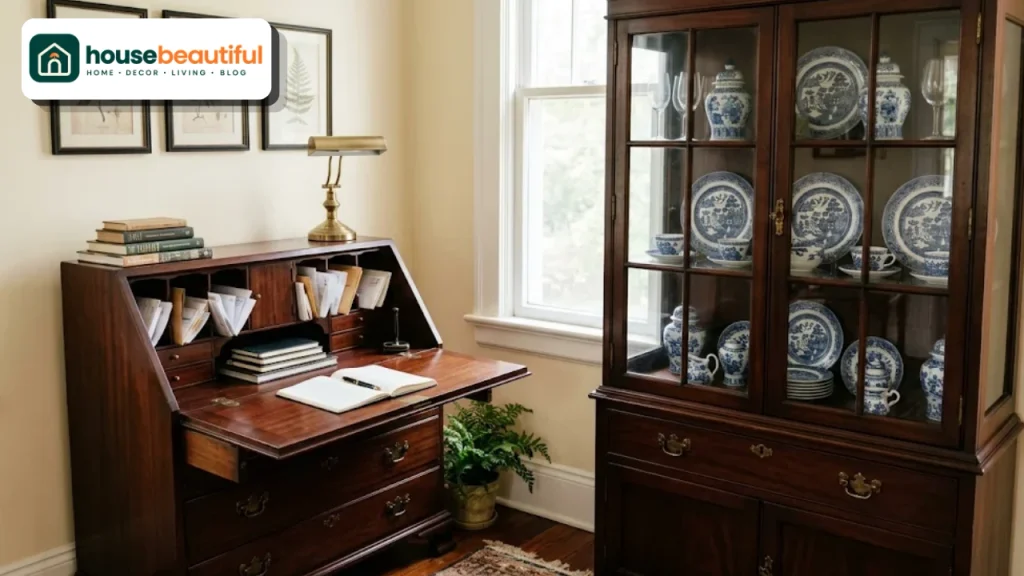
China cabinets and display cabinets. Glass-front cabinets show off porcelain, silver or collections, adding personality and history.
Secretary desks. A secretary combines a drop-front writing surface with drawers below and shelves above. It is both practical and beautiful.
Media armoires and cabinets. A traditional cabinet or armoire with doors can hide a TV and electronics, keeping the room’s classic look intact.
Chests and sideboards. A chest of drawers or sideboard offers storage and a surface for lamps and art.
Choosing Wood Finishes
Wood is central to traditional furniture, so choosing finishes carefully matters.
Classic woods
Mahogany, ch,erry and walnut are the most traditional choices. They have rich, warm tones that deepen with age. Oak is sturdier and suits country-style traditional rooms.
Mixing wood tones
You do not need every piece to match. Mixing two or three related wood tones looks more natural and collected than a single matching set.
Keep the undertones consistent, either warm red-brown or cool brown, so the mix feels deliberate.
Painted pieces
A painted or distressed cabinet can lighten a room full of dark wood. Soft white,, sage or navy painted pieces are common in English and French country styles.
Upholstery Fabrics and Patterns
Fabric choices bring color, texture and comfort to traditional furniture.
Classic fabrics
Velvet, damask, chenille, linen and leather all suit traditional rooms. Velvet adds richness and depth, damask brings subtle pattern, and leather offers durability and warmth.
Patterns
Traditional rooms embrace pattern: florals, toile, stripes, plaids, paisleys and chintz. A good rule is to mix one large-scale pattern, one small-scale p,attern and one solid in a shared color palette.
Practical choices
For family rooms, look for performance fabrics that resist stains, or choose slipcovers that can be washed. Mid-tone colors and patterns hide everyday wear better than pale solids.
Details
Nailhead trim, contrast welting, bullion, fringe and tufting are classic upholstery details. Use them in moderation so the room feels refined rather than busy.
Curtains, Rugs and Lighting That Suit Traditional Furniture
Furniture never works alone. The softer elements around it decide whether the room feels finished.
Curtains
Floor-length curtains hung high and wide make windows look grander. Pleated headings, tiebacks and valances are classic choices. Fabrics such as linen, silk-blend or patterned cotton pair well with wood and velvet.
Rugs
Persian, Oriental, Aubusson and needlepoint rugs are the traditional favorites. Their patterns and soft colors tie different wood tones and fabrics together. A natural sisal or jute rug layered under a smaller patterned rug works well in a more relaxed room.
Lamps
Traditional rooms rely on table lamps rather than overhead light. Ceramic ginger-jar lamps, brass candlestick lamps and pleated fabric shades are timeless. Place lamps in pairs on consoles or side tables to reinforce symmetry.
Art and mirrors
Gilt-framed mirrors, oil paintings, botanical prints and family portraits all belong in a traditional setting. Hang art so its center sits about 57 to 60 inches from the floor.
How to Judge Quality
Traditional furniture is meant to last for decades, so construction matters as much as style. The furniture traditional living room buyers love most is often the piece built well enough to hand down.
| What to check | Good quality signs |
|---|---|
| Frame | Kiln-dried hardwood, not particleboard |
| Joints | Dovetail, mortise and tenon, or corner-blocked joints |
| Springs | Eight-way hand-tied or sinuous springs |
| Cushions | High-density foam, often wrapped in down or fiber |
| Wood finish | Smooth, even finish with visible grain |
| Drawers | Dovetailed drawers that glide smoothly |
Sit on sofas and chairs before buying, lift a corner to feel the weight, and open drawers to check how they move. Heavier, solid pieces usually indicate better construction.
Investing in a few high-quality pieces, especially the sofa and main chairs, is more rewarding than filling the room with cheaper furniture that will not last.
Arranging Traditional Furniture
The way you arrange traditional pieces is as important as choosing them.
Embrace symmetry
Traditional rooms thrive on balance. Place matching chairs on either side of a fireplace, a pair of lamps on a console, or two sofas facing each other. Symmetry creates calm and order.
Create a conversation group
Arrange the sofa and chairs so people can talk easily, ideally within about 8 to 10 feet of each other. A coffee table or ottoman should sit about 16 to 18 inches from the sofa.
Anchor with a rug
A large Persian, Oriental or needlepoint rug grounds the seating group and adds pattern and warmth. Choose one large enough for the front legs of all seating.
For detailed layouts, read our guide to living room seating arrangements.
A Step-by-Step Plan for Furnishing the Room
If you are starting from scratch, this order keeps decisions simple and avoids expensive mistakes.
Measure and draw the room. Note doors, windows, the f,ireplace and outlets. A rough floor plan prevents buying pieces that do not fit.
Pick the focal point. Usually the fireplace, a large window or a built-in bookcase. Everything else will be arranged around it.
Choose the sofa. It is the largest and most expensive piece, so its style and color guide the rest.
Add a pair of chairs. Wingbacks, cl,ub chairs or bergeres opposite or beside the sofa complete the conversation group.
Select the rug. Pull colors from the sofa and chairs, and size it so front legs rest on it.
Layer in tables. Coffee table or ottoman first, then side tables and a console.
Add storage and display. A bookcase, cabinet or secretary gives the room depth and history.
Finish with lighting, curtains and art. These soften the room and make it feel lived-in.
Working in this sequence means each furniture traditional living room decision builds on the last, rather than competing with it.
Keeping a Traditional Room Fresh
The biggest worry with traditional furniture is that it can look dated. A few strategies keep it feeling current.
Lighten the walls. Pair rich wood furniture with warm wh,ite, cream or soft greige walls so the room does not feel heavy.
Edit accessories. Display fewer, better objects. Clear surfaces make classic furniture look intentional rather than cluttered.
Mix in a modern piece. One contemporary element, such as an abstract painting, a scul,ptural lamp or a glass side table, adds freshness.
Update fabrics. Re-covering an old sofa or chairs in a fresh linen or a modern pattern can transform a traditional piece.
Use better lighting. Layered lighting with warm bulbs brings out the glow of wood. Our post on living room lighting has more ideas.
Formal Rooms vs. Family Rooms
Many homes have both a formal front room and a casual family space. Traditional furniture can suit both, with different priorities.
Formal living or drawing room. Lean on camelback sofas, bergere chairs, a polished coffee table and display cabinets.
Fabrics can be more delicate, such as silk-blend or light velvet, since the room sees less daily use. Our drawing room interior design ideas show how to style this kind of space.
Family room. Choose deep rolled-arm sofas, leather, club chairs and a large upholstered ottoman instead of a glass or wood coffee table.
Performance fabrics, washab,le slipcovers and darker patterns cope better with kids and pets.
The best furniture traditional living room choices for a busy household combine classic shapes with practical, forgiving materials.
Small Traditional Living Rooms
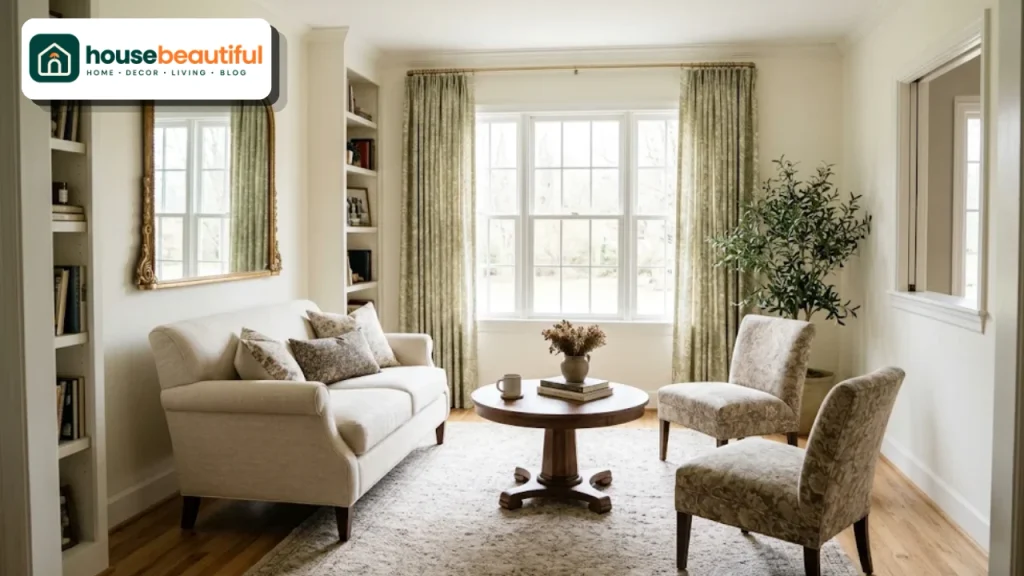
[Image 4: small traditional living room with loveseat, slipper chairs and round pedestal table]
Traditional furniture can be large, but it works in smaller rooms with careful choices.
Choose a loveseat or apartment-size rolled-arm sofa instead of a full Chesterfield. Slipper chairs or small bergeres take up less space than wingbacks.
Pick pieces raised on legs so the floor shows beneath them, which makes the room feel bigger. A round pedestal table is easier to walk around than a large rectangular coffee table.
Use a large mirror with a classic frame to reflect light, and keep the palette light. Our guide to small living room ideas has more space-saving tips.
Buying on a Budget
You do not need a large budget to furnish a traditional living room beautifully. Much of the furniture traditional living room decorators prize is easy to find secondhand.
Shop secondhand. Auctions, antique shops,, estate sales and online marketplaces are full of solid wood tables, chairs and cabinets at a fraction of their original price.
Invest in the sofa and one good pair of chairs, then fill in with vintage side tables, lamps and mirrors.
Re-upholstering a well-built old chair is often cheaper than buying a new one of similar quality. A fresh fabric can make it look like a new piece.
| Spend more on | Save on |
|---|---|
| Sofa with a solid frame | Side tables (vintage) |
| Main armchairs | Lamps and accessories |
| A quality rug | Mirrors and art (secondhand) |
| One statement storage piece | Cushions and throws |
Caring for Traditional Furniture
Good care keeps traditional furniture beautiful for generations.
Wood. Dust regularly with a soft cloth, and use coasters to protect surfaces. Wax or polish occasionally with a product suited to the finish. Keep wood away from direct sunlight and heat sources, which can fade and crack it.
Upholstery. Vacuum upholstery regularly, rotate cushions, and blot spills quickly. Have valuable pieces professionally cleaned when needed.
Leather. Wipe leather with a damp cloth and condition it occasionally so it stays supple.
Humidity. Wood expands and contracts with humidity. Avoid placing pieces directly next to radiators or AC vents.
Traditional Furniture for Families and Pets
Traditional rooms can be both beautiful and practical when you plan for real life.
Leather ages gracefully and wipes clean, which makes it a smart choice where pets and children are around. Tightly woven fabrics resist claws better than loose weaves or velvet.
Rounded table edges and sturdy turned legs are safer than sharp glass corners. Heavy bookcases and cabinets should be anchored to the wall.
Choose mid-tone wood finishes rather than very dark or very glossy ones, since they hide scratches and fingerprints. A few well-placed baskets and lidded boxes keep toys and remotes out of sight without spoiling the look.
Seasonal Styling Ideas
Traditional furniture stays the same all year, but small changes keep the room feeling alive.
In autumn and winter, add wool throws, velvet cushions, in deep colors and a plaid blanket on a wingback. Candles and warm lamplight bring out the richness of the wood.
In spring and summer, swap to linen cushion covers,, lighter throws and fresh flowers in a classic vase. Pulling curtains wide and rolling back a heavy rug can make the same furniture feel airy and relaxed.
Common Mistakes to Avoid
Buying a matching set. Matching sofa, loveseat and chair sets can look like a showroom. Mix complementary pieces instead.
Too much dark wood. A room full of dark furniture can feel heavy. Balance with light,er walls, fabrics and a painted piece.
Ignoring scale. Oversized traditional pieces can overwhelm a small room. Measure carefully.
Overcrowding. Traditional rooms can collect a lot of furniture. Leave space to move and breathe.
Neglecting comfort. Formal pieces that nobody wants to sit on defeat the purpose. Choose comfort first.
FAQs:
What furniture is used in a traditional living room?
Typical pieces include a rolled-arm or Chesterfield sofa, wingback or club chairs, a wood coffee table or ottoman, side tables, a ,console, bookcases and a display cabinet.
What wood is best for traditional furniture?
Mahogany, cherry, walnut and oak are the most traditional choices because of their rich color and durability.
How do I make traditional furniture look modern?
Lighten the walls, edit accessories, add one or two contemporary pieces, and re-cover upholstery in fresh fabrics.
Should all my traditional furniture match?
No. Mixing complementary pieces and wood tones looks more natural and collected than a matching set.
What is the most traditional sofa style?
The Chesterfield and camelback are among the most traditional, along with classic rolled-arm sofas.
What fabrics suit traditional furniture?
Velvet, damask, chenille, linen, leather, and patterned fabrics such as florals, stripe,s and toile.
How do I arrange traditional living room furniture?
Use symmetry around a focal point, create a conversation gro,up and anchor the seating with a large rug.
Is traditional furniture expensive?
New, well-made pieces can be costly, but secondhand and vintage traditional furniture is often very affordable.
How do I know if traditional furniture is good quality?
Look for kiln-dried hardwood frames, dovetail or mortise and tenon joints, hand-tied or sinuous spri,ngs and smooth, solid drawers.
Can traditional furniture work in a small room?
Yes. Choose a loveseat, slipper chairs, pieces on legs and a round pedestal table, and keep the palette light.