
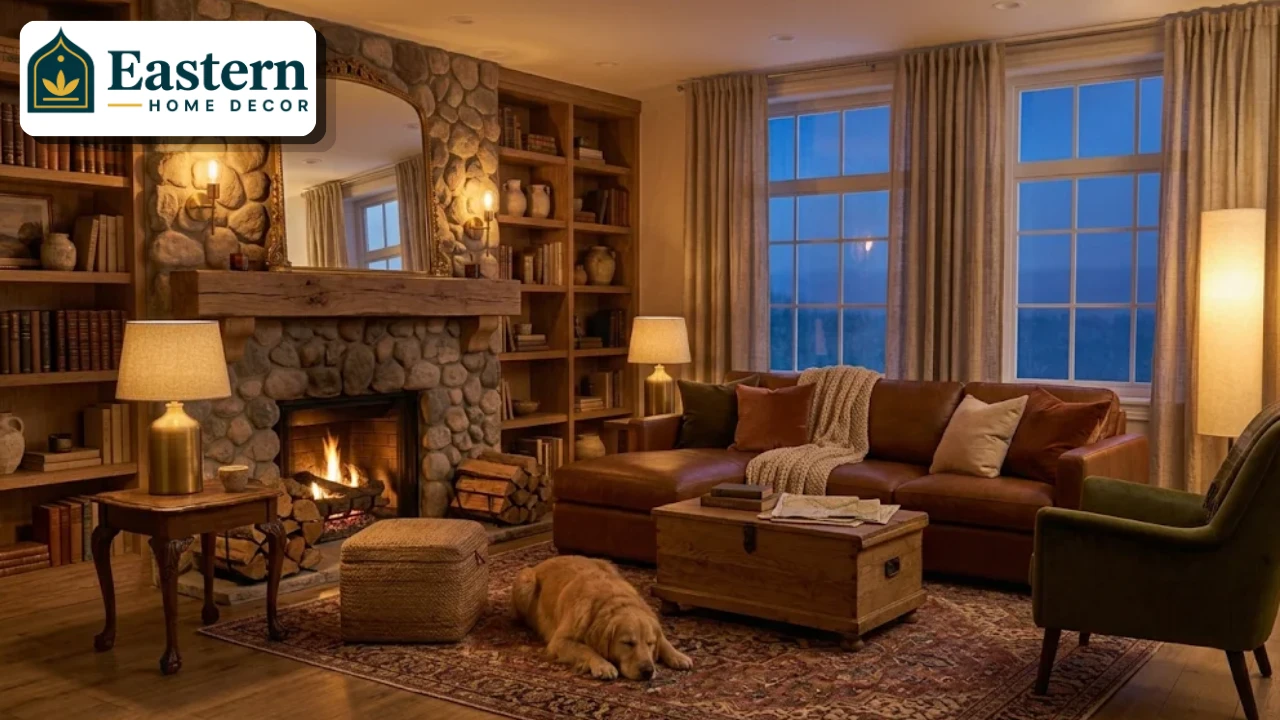
You know it when you see it. A deep sectional piled with cushions, a fireplace with a wide mantel, warm wood floors, a big rug, family photos on the bookshelves, and a window that lets in plenty of light.
It is the room from countless films and TV shows, where families watch the game, friends gather for holidays,s and everyone ends up on the sofa at the end of the day.
But what actually makes a room feel American, and how do you create that look in your own home?
This guide breaks down the living room American families love into its essential parts. It covers the defining elements, the most popular American styles,
what Americans say they want, and how to adapt the look to any home, anywhere in the world.
What Makes a Living Room Feel American?
American interior style is less a single look and more a set of priorities. Comfort comes first, then function, then character.
An American living room is designed to be used every day. It is relaxed rather than formal, generous in scale, and built around family life, television,n and gathering with friends.
It also borrows freely. American style grew from English, Dutch, French and Spanish colonial roots, then absorbed Craftsman,
mid-century modern, farmhouse and coastal influences. The result is flexible, which is exactly why it travels so well.
At its heart, a living room American designers would recognize shares a few traits: oversized comfortable seating, a clear focal point such as a fireplace or TV, warm natural materials, layered textiles and a personal, lived-in feel.
A Short History of the American Living Room
The American living room has changed dramatically over the last century, and that history explains much of its character today.
In the early 1900s, many homes had a formal front parlor, kept tidy for visitors and rarely used by the family. As homes modernized, that formal room gradually gave way to the more relaxed “living room.”
After World War II, suburban homes spread across the country, and the television arrived. Furniture began to face the screen, and the family room became the center of daily life. Mid-century modern design flourished in this period.
From the 1980s onward, the great room and open-plan layouts joined the living room to the kitchen. Seating grew deeper, sectionals became standard, and the room took on its current role as the home’s main gathering place.
Understanding this history helps explain the living room American homes have today: casual, social, built around the TV and the fireplace, and designed for everyone to use.
What Americans Say They Want
Survey data gives a useful picture of the ideal. In a 2024 survey, furniture retailer Joybird asked more than 2,500 Americans to describe their dream living room.
The results were telling. A sectional was the overwhelming favorite sofa shape, chosen by 84 percent of respondents
, and respondents in more than half the states wanted that sofa in leather. Nearly two-thirds picked a lounge chair as their preferred accent seat.
Other popular details included medium to dark brown hardwood floors, white or off-white walls, matte black hardware and big windows that let in lots of natural light.
The most popular style nationwide was “country house”: think modern farmhouse with a European twist, with exposed wooden beams, floral patterns and one-of-a-kind pieces such as heirlooms and flea market finds.
These findings line up with what you see in American homes. People want comfort, warmth and character more than showroom perfection.
The Defining Elements of an American Living Room
Whatever the specific style, most American living rooms are built from the same ingredients. Get these right and the room will read as American, even before you add a single accessory.
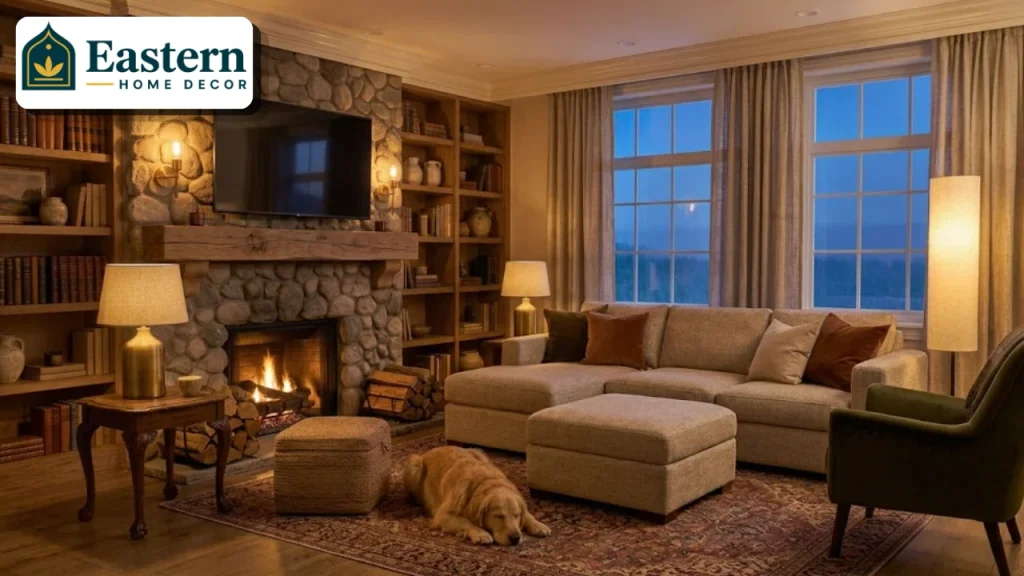
A big, comfortable sofa
The sofa is the heart of the room. Large sectionals, deep-seated sofas and reclining seats are staples because they invite people to stretch out, nap and watch a film together.
Choose generous proportions and deep cushions. Performance fabric or leather handles family life, pets and spills.
A focal point: fireplace or TV
Traditionally, seating is arranged around a fireplace, often with a wide mantel for art, candles and seasonal decor. In many modern homes, the TV shares or takes over that role.
The most American solution combines the two, with the TV above or beside the fireplace, framed by built-in shelving on each side.
Built-in shelving and storage
Built-in bookcases flanking a fireplace or window are a classic American feature. They hold books, family photos, collected objects and baskets of everyday clutter.
If built-ins are not possible, a pair of matching tall bookcases gives a similar look.
Warm wood floors and a large rug
Hardwood floors, especially in medium to dark brown tones, are part of the American image. A large area rug defines the seating area and adds softness underfoot.
Choose a rug big enough for at least the front legs of every seat to rest on it. Wool, jute a,nd vintage-style patterned rugs all suit the look.
Architectural details
Crown molding, wainscoting, window trim, exposed beams, and paneled walls give American rooms their sense of craftsmanship. Even simple molding added to a plain room can make a big difference.
Layered lighting
American living rooms rarely rely on a single ceiling light. Table lamps on side tables, a floor lamp by the reading chair a,nd sconces or picture lights create a warm, evening glow.
Accent chairs and ottomans
A lounge chair or club chair beside the sofa completes the conversation group. Leather club chairs, upholstered wingbacks a,nd swivel chairs are all common, depending on the style.
Ottomans earn their place too. They work as a coffee table, a footrest a,nd extra seating when guests arrive, which is why they appear in so many American homes.
Hardware and finishing details
Small finishes carry a lot of style. Matte black, aged brass , and oil-rubbed bronze are typical choices for lamps, curtain rods a,nd cabinet hardware.
Keep finishes consistent, with one main metal and one accent, so the room feels planned rather than pieced together.
Personal touches
Family photographs, framed art, books, quilts,nd collected objects make the room feel lived-in. American style celebrates personal history over perfect styling.
Six Popular American Living Room Styles
“American style” covers several distinct looks. Choosing one of them gives your room a clear direction.
| Style | Key features | Colors | Best for |
|---|---|---|---|
| Modern farmhouse | Shiplap, beams, slipcovered sofas, black metal accents | White, cream, black, warm wood | Family homes wanting a relaxed, rustic feel |
| Traditional | Rolled-arm sofas, wingback chairs, crown molding, patterned rugs | Navy, burgundy, cream, gold | Formal living rooms and classic homes |
| Transitional | Clean-lined furniture with classic details, neutral palette | Greige, taupe, soft white, charcoal | Most homes; the safest middle ground |
| Craftsman | Built-ins, exposed wood, simple joinery, handmade pieces | Earthy greens, browns, ochre | Older bungalows and wood-lovers |
| Mid-century modern | Tapered legs, low profiles, walnut, iconic chairs | Teal, mustard, orange, walnut | Apartments and design enthusiasts |
| Coastal | Light woods, linen, natural fibers, airy layout | White, sand, soft blue | Sunny, warm-climate homes |
Modern farmhouse
Modern farmhouse took over American homes during the last decade and remains popular in softer, warmer forms.
Look for shiplap or board-and-batten walls, wood beams, slipcovered sofas, vintage-style rugs and matte black lighting and hardware.
Keep it fresh by using warmer whites and more natural wood, and by avoiding too many signs and word art.
Traditional American
Traditional living rooms draw on colonial and English roots. Expect symmetrical layouts, rolled-arm sofas, wingback chairs, wood tables, oriental-style rugs,nd rich colors such as navy and burgundy.
This style suits formal living rooms reserved for guests and holidays. Brass lamps and framed landscapes complete the look.
Transitional
Transitional style is arguably the most common American living room today. It blends traditional comfort and details with cleaner, simpler shapes.
A tailored sofa, a classic armchair, a neutral palette and a mix of wood and metal finishes create a room that feels current but will not date quickly.
Craftsman
Craftsman style celebrates handmade quality. Built-in bookcases, window seats, exposed wood trim, simple sturdy furniture,nd earthy colors define it.
It is ideal for older homes and anyone who loves natural wood and craftsmanship.
Mid-century modern
Born in post-war America, mid-century modern features low, clean-lined furniture on tapered legs, walnut wood, graphic patterns and bold accent colors.
It suits smaller rooms and apartments, ecbecausehe furniture is visually light.
Coastal
Coastal living rooms bring a relaxed, beach-house feel with light woods, white and sand tones, soft blues, linen slipcovers and natural fibers like jute and rattan.
It works especially well in warm, sunny climates, even far from the ocean.
How to Create an American Living Room Step by Step
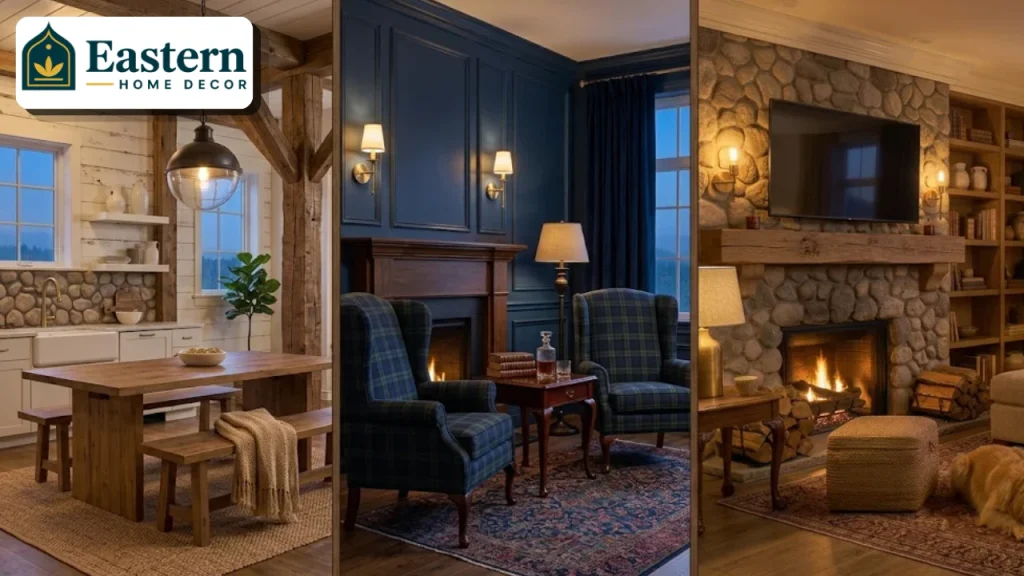
Creating the living room American homeowners enjoy is easier when you work in order. Each step builds on the last.
Choose your style direction
Pick one of the styles above as your main direction. You can borrow from others, but one clear lead keeps the room cohesive.
Plan the layout around the focal point
Arrange the sofa facing the fireplace or TV. Add one or two armchairs to create a conversation circle, and leave clear walkways of around 30 to 36 inches.
In larger rooms, float the sofa away from the wall and place a console table behind it. This is a very American way of defining a seating area in an open-plan home.
Invest in the sofa
Spend the biggest share of your budget on a comfortable sofa or sectional. It will be used every day and sets the scale for everything else.
Ground it with a rug and coffee table
Choose a large rug and a sturdy coffee table, often wood or an upholstered ottoman. Ottomans are popular in American homes because they double as footrests and extra seating.
Add storage and shelving
Built-ins, bookcases or a long media console give a place for books, games, electronics and decor.
Layer the lighting
Add at least three lamps around the room. Use warm bulbs around 2700K for a cozy glow.
Finish with textiles and personal pieces
Throw blankets, plenty of cushions, curtains hung high and family photos complete the look. A basket of blankets beside the sofa is a classic American touch.
Choosing the Right Sectional
Because the sectional is so central to the look, it deserves careful thought. The wrong size or shape can make the whole room feel cramped.
Measure the room and mark the sofa footprint on the floor with painter’s tape before buying. Leave space for walkways and a coffee table that is easy to reach.
An L-shaped sectional suits most rooms and fits neatly into a corner. A sofa with a chaise gives a place to stretch out without the bulk of a full L. U-shaped sectionals are best saved for large family rooms built around a TV.
Look at seat depth as well as width. Deep seats are wonderful for lounging, while slightly shallower seats suit people who prefer to sit upright for conversation.
Finally, think about fabric. Performance fabrics resist stains, leather ages well and wipes clean, and washable slipcovers are ideal for young families.
Choosing the right sofa is the single most important step in creating a living room American families will actually use every day.
Color Palettes That Feel American
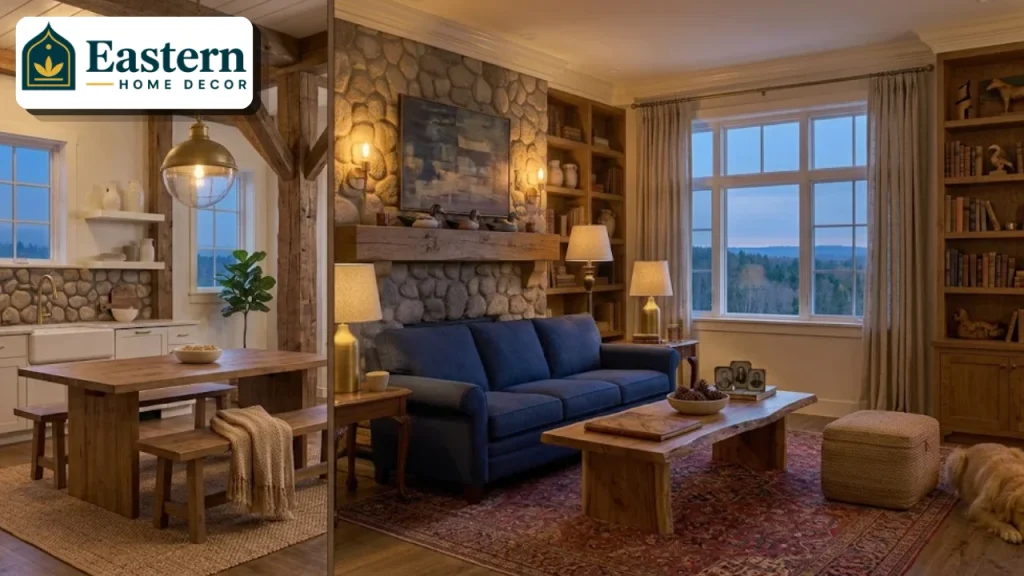
American living rooms usually start with a neutral base. White, off-white, cream, greige and warm beige walls let furniture, wood a,nd textiles take center stage.
Accent colors depend on style. Traditional rooms love navy, burgundy and forest green. Farmhouse rooms pair white with black and natural wood. Coastal rooms lean on soft blues and sand.
Warmer neutrals have largely replaced the cool grays that were popular a decade ago. If you want a fresh American look, choose creamy whites and earthy tones over stark gray.
Red, white ,nd blue can appear, but subtly. A navy sofa, a red-patterned rug, or a vintage quilt hints at Americana without turning the room into a theme.
Windows and Curtains
Big windows are one of the features Americans most want in a living room, and how you dress them matters.
Hang curtain rods high and wide, close to the ceiling and several inches beyond the frame on each side. Let curtains fall to the floor. This makes windows look larger and lets in more light when the curtains are open.
Classic American choices include linen or cotton drapery panels, woven wood shades, and simple white shutters. Layering a shade with side curtains adds privacy and softness at the same time.
The American Approach to Comfort and Family Life
What truly sets American living rooms apart is how they are used. They are built for real life, not just for show.
Seating is deep and plentiful, with room for the whole family plus guests. Recliners and sectionals with chaises are common, and many homes have a dedicated spot for the family dog.
The TV matters. Movie nights, sports and streaming are part of daily life, so the screen is placed for comfortable viewing from every seat.
Holidays shape the room too. Mantels are decorated for seasons and celebrations, and there is usually space to bring in extra chairs when family visits.
Designing a living room American style means accepting that it will be used hard. Durable fabrics, washable slipcovers and surfaces that can take a cup of coffee are part of the look.
Seasonal and Holiday Styling
Few things are more American than decorating the living room for the seasons. The mantel, coffee tabl,e and sofa cushions change through the year.
In autumn, warm colors, pumpkins, dried leaves and plaid throws create a harvest feel. Winter brings garlands, candles, stockings on the mantel and a decorated tree in the corner.
Spring calls for fresh flowers, lighter cushions and brighter textiles. In summer, rooms open up with linen, natural fibers and greenery.
The trick is to keep the main furniture neutral so these seasonal layers can come and go easily. Store seasonal pieces in labeled boxes so changing the room takes an afternoon, not a weekend.
Getting the Look on a Budget
You do not need a large budget to create an American-style living room. Focus on the pieces that define the look and save on the rest.
Put most of the money into the sofa and the rug. Then add molding or picture-frame trim to a plain wall, a pair of affordable bookcases styled like built-ins, and secondhand wood side tables.
Thrift stores and online marketplaces are full of solid wood furniture, brass lamps and framed art that suit American styles perfectly. A coat of paint or new lampshades can transform them.
Finally, use what you already have. Family photos, books and inherited pieces are exactly what give American living rooms their warmth.
Adapting the American Look Outside the US
Many readers love the American living room but live in apartments, warmer climates or homes with very different architecture. The good news is that the look adapts well.
No fireplace?
Create a focal wall instead. A media wall with built-in shelving, a large piece of art above a console or an electric fireplace insert gives the same anchor.
Tile or ston,e floors?
Hardwood is not essential. Wood-look porcelain tiles are practical in hot climates, and a large wool or jute rug brings the warmth that defines American rooms.
Smaller rooms
Choose a compact sectional or a sofa with a chaise rather than a huge U-shape. Mid-century and transitional styles suit smaller spaces because their furniture is lighter.
Warm climates
Swap heavy wool throws for cotton and linen, and choose coastal or transitional palettes. Ceiling fans with wood blades fit right into the American look.
Local touches
The most authentic American rooms mix in personal history, so do the same. Local textiles, family heirlooms and regional crafts sit naturally alongside American-style furniture. That blend is, in fact, very American.
American vs. European Living Rooms
It helps to understand what makes American living rooms different from their European counterparts.
| Feature | American living room | European living room |
|---|---|---|
| Scale | Larger rooms, oversized furniture | Smaller rooms, compact furniture |
| Sofa | Deep sectionals and recliners | Slimmer sofas and armchairs |
| Focal point | Fireplace and TV | Window, art or bookshelves |
| Layout | Often open-plan with the kitchen | More often a separate room |
| Mood | Casual, family-centered | Often more formal or minimal |
Neither is better. But if you want an American feel, lean into scale, comfort and the central gathering spot.
Common Mistakes to Avoid
Furniture that is too small. Undersized sofas and rugs undermine the generous American feel. Measure and choose pieces in proportion.
Too many themed accessories. Flags, signs and word art can quickly feel like a theme park. Hint at Americana rather than spelling it out.
Overly matched furniture sets. Buying a matching sofa, loveseat and chair together looks like a showroom. Mix materials and shapes for a collected feel.
Ignoring lighting. One ceiling light makes the room flat. Add lamps at different heights.
Forgetting storage. American rooms hold a lot of daily life. Without built-ins, baskets or a console, clutter takes over.
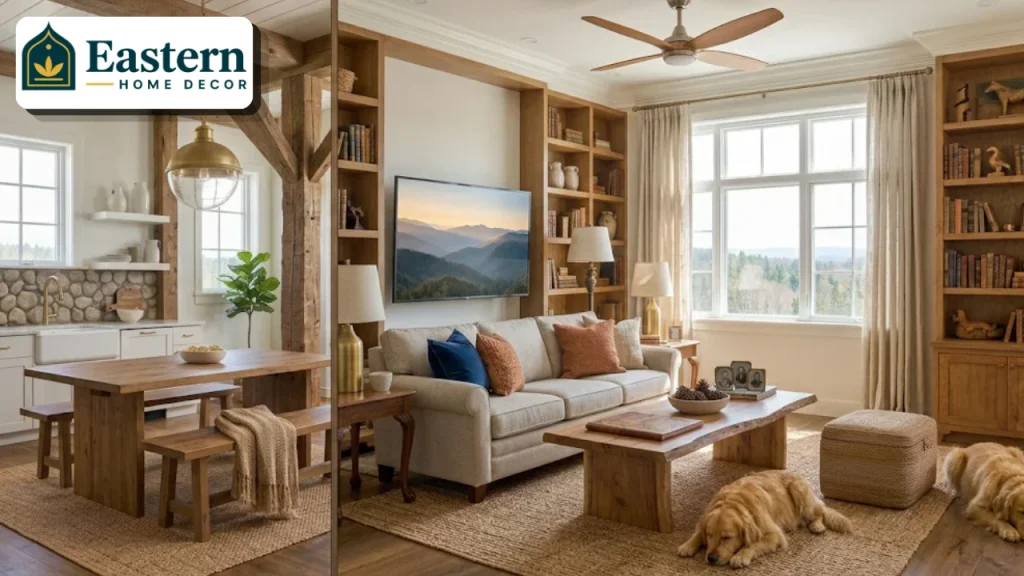
FAQs:
What is an American-style living room?
It is a comfortable, family-centered living room with oversized seating, a fireplace or TV as the focal point, warm wood, layered textiles,i tils, nd personal touches.
What furniture is typical in an American living room?
A large sectional or deep sofa, a recliner or lounge chair, an ottoman or wood coffee table, side tables with lamps, built-in bookcases and a media console.
What is the most popular living room style in America?
Transitional and modern farmhouse styles are very common. In Joybird’s 2024 survey, a “country house” look, a farmhouse style with European influences, was the most popular nationally.
What colors are used in American living rooms?
White, off-white and warm neutrals for walls, with accents such as navy, burgundy, forest green, black, and natural wood depending on the style.
How can I make my living room look American?
Add a large comfortable sofa, a central focal point, a big rug, built-in style shelving, layered lamps, molding details, and personal photos and textiles.
Can I create an American living room in a small apartment?
Yes. Choose a compact sectional, a mid-century or transitional style, a larger rug,and wall-mounted shelving. Comfort and warmth matter more than size.
What is the difference between American and European living rooms?
American rooms tend to be larger and more casual, with oversized seating built around a TV or fireplace. European rooms are often smaller, more formal, and more compact.
Do American living rooms always have a fireplace?
No, but it is a classic focal point. A media wall with built-ins or an electric fireplace creates a similar effect.
What flooring suits an American living room?
Medium to dark hardwood is the classic choice. Wood-look tiles and large area rugs are good alternatives in warm climates.
What makes American farmhouse style different?
Farmhouse uses shiplap, exposed beams, slipcovered sofas, black metal accents,nd rustic wood for a relaxed, countryside feel.