
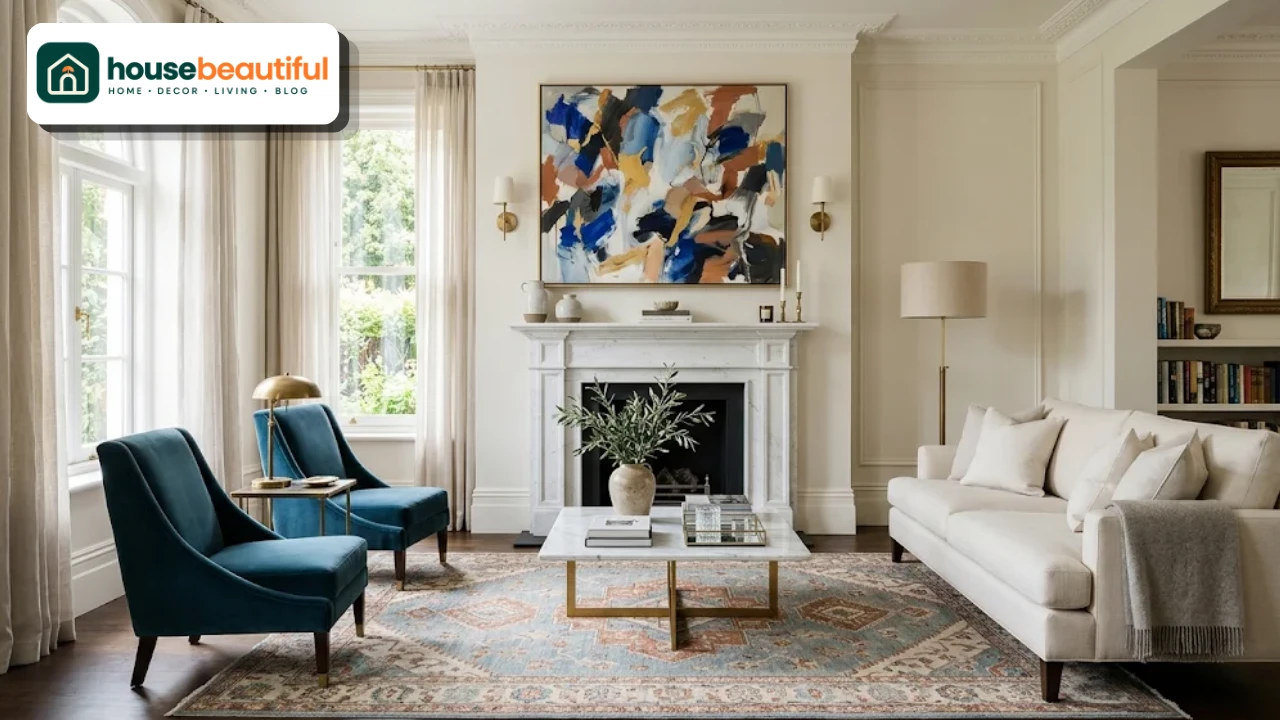
Some living rooms feel instantly right. There is a marble fireplace and elegant molding, but also a clean-lined sofa, a bold abstract painting, and a sculptural lamp. Nothing looks old-fashioned, and nothing looks like it will date next year.
That balance is the heart of a classic contemporary living room. It borrows the proportion, symmetry, and craftsmanship of traditional design, then pairs them with the simplicity, comfort, and fresh materials of today.
It is one of the most livable styles there is, but it is also easy to get wrong. Too much classic and the room feels stuffy;
Too much contemporary and it loses its warmth. This guide explains how to strike the balance, with practical rules, furniture and color advice, and ideas for every size and budget.
What Is Classic Contemporary Style?
Classic contemporary style combines two design traditions in one room.
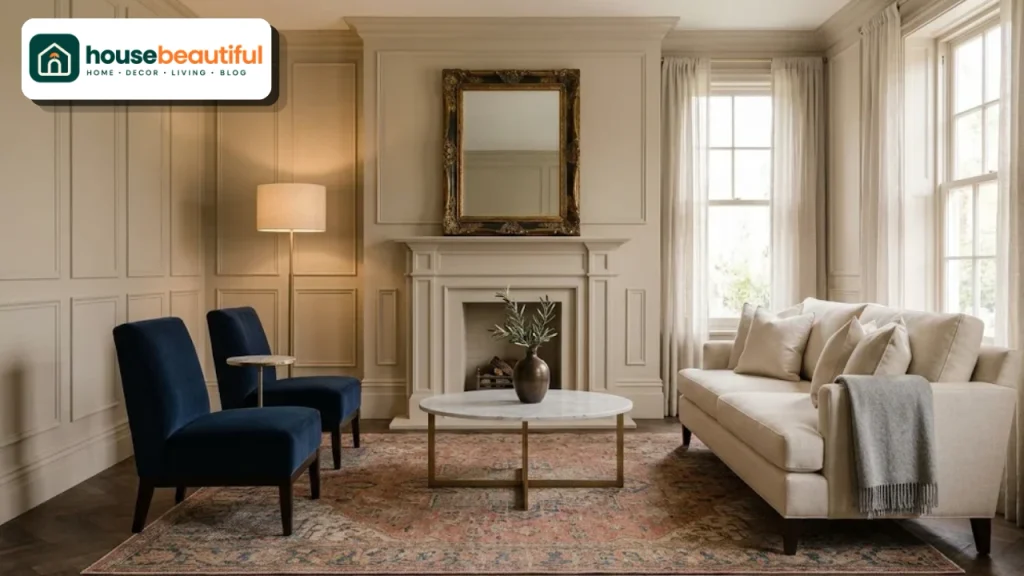
The classic side brings architectural detail, symmetry, rich materials and timeless shapes: paneled walls, crown molding, fireplaces, rolled arms, turned legs, marble and brass.
The contemporary side brings clean lines, a calm palette, less clutter, modern art, sculptural lighting and newer materials such as glass, lacquer and matte metals.
The result feels elegant but relaxed. It suits period homes that want a fresh update, as well as new homes that need character.
Why This Style Works So Well
Classic contemporary design has lasted because it solves a real problem. Purely traditional rooms can feel formal and heavy, while purely modern rooms can feel cold and impersonal.
Combining the two gives you the comfort and character of classic design without the clutter, and the freshness of contemporary design without the sterility.
It is also forgiving. Because the style deliberately mixes old and new, you can add a vintage find or a modern piece over time, and it will still fit.
That makes it ideal for people who inherit furniture, love antiques,s or simply want a room that evolves.
Finally, it ages well. Classic proportions and quality materials never really go out of style, and the contemporary elements are usually easy to update, such as art, cushions or a lamp.
Classic vs. Contemporary vs. Transitional
These terms are often used together, so it helps to see how they differ.
| Feature | Classic | Contemporary | Classic contemporary |
|---|---|---|---|
| Lines | Curved, ornate | Clean, simple | Tailored classic shapes with simplified details |
| Palette | Rich, layered colors | Neutral with bold accents | Warm neutrals with one or two deep accents |
| Materials | Dark wood, damask, gilt | Glass, metal, concrete | Marble, brass, wood, linen, velvet |
| Accessories | Many antiques and collections | Minimal, sculptural | A few classic pieces, modern art |
| Mood | Formal | Relaxed, airy | Elegant but comfortable |
Transitional style is a close cousin. It usually leans more neutral and softer, while classic contemporary often keeps stronger architectural detail and more contrast.
The Golden Rules of Blending Classic and Contemporary
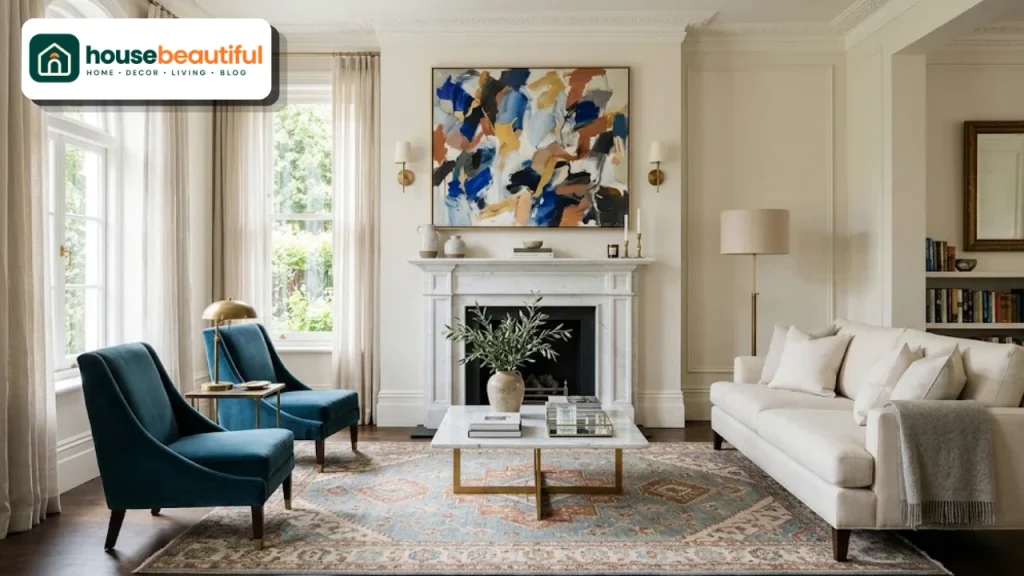
The secret of a successful classic contemporary living room is intentional mixing. These rules keep the blend calm and cohesive.
Choose a lead style
Decide which style leads, then let the other support it. A common ratio is around 70 percent one style and 30 percent the other.
In a period home, classic architecture often leads and contemporary furniture supports. In a new build, contemporary architecture leads and classic pieces add soul.
Repeat a unifying palette
Use a restrained palette across both classic and contemporary pieces. When an antique chair and a modern sofa share a color or tone, they look like they belong together.
Use bridge pieces
Some pieces naturally sit between the two styles: a tailored sofa with a slim rolled arm, a marble coffee table with a simple base, or a brass lamp with a clean drum shade. These bridge pieces connect the old and the new.
Balance shapes
Pair curves with straight lines. A curvy classic armchair looks fresh beside a sharp-edged contemporary coffee table, and a sleek sofa softens under an ornate gilt mirror.
Keep it edited
Classic rooms traditionally display many objects. In a classic contemporary room, choose fewer, better pieces and leave space around them. Negative space is what keeps the look modern.
Start With the Architecture
Architecture gives a classic contemporary room its backbone.
If your room already has molding, a ceiling rose or a fireplace, celebrate it. Paint the trim the same color as the walls for a modern, tonal look, or pick it out in a slightly deeper shade for definition.
If your room is a plain box, add classic detail. Picture-frame molding, wall paneling, a simple cornice or a new mantelpiece can transform a builder-grade space. Keep profiles simple and clean so they feel contemporary rather than fussy.
Tall, generous doorways and windows also feel classic. Floor-length curtains hung close to the ceiling exaggerate height and add elegance.
Wall Treatments
Walls are where classic detail and contemporary restraint meet.
Picture-frame molding painted in the same color as the wall gives classic structure with a quiet, modern finish. Full-height paneling behind the sofa or around the fireplace adds richness.
Wallpaper can work too. Choose subtle textures such as grasscloth or linen-look papers, or a large-scale classic pattern in a muted colorway for a feature wall.
Limewash or textured plaster finishes add depth and suit both styles, softening large walls without adding pattern.
Ceiling Details
Ceilings are often forgotten, yet they offer an easy way to add classic character.
A simple cornice or crown molding frames the room. A ceiling rose around a chandelier is a lovely classic touch that looks fresh when painted the same color as the ceiling.
In rooms with higher ceilings, a coffered or tray ceiling adds drama. Keep the profiles crisp and clean so they read as contemporary rather than ornate.
Color Palettes for a Classic Contemporary Living Room
Color is one of the strongest tools for uniting old and new.
Warm neutrals
Ivory, warm white, greige, stone and soft taupe are the classic foundation. They let architecture and furniture shine and make mixing styles easy.
Deep accents
Navy, forest green, oxblood, charcoal and chocolate add depth and sophistication. Use them on a sofa, a pair of chairs, a lacquered cabinet or one feature wall.
Tonal schemes
A tonal scheme uses several shades of one color, such as cream through camel to cognac. It feels calm and expensive and keeps a mixed room cohesive.
Black accents
A touch of black, on picture frames, lamp bases, a coffee tabl,e or window frames, sharpens a classic room and makes it feel more contemporary.
Our guide to living room paint colors has more help choosing the right shade for your light.
Furniture Ideas
The furniture is where classic and contemporary meet most directly.
The sofa
A tailored sofa with clean lines and a hint of classic detail, such as a slim rolled arm, tight ba,ck or turned legs, is ideal. Tufted sofas in neutral linen or velvet also bridge both styles.
Accent chairs
Pair a modern sofa with classic chairs, such as wingbacks, bergeres or slipper chairs. Or do the reverse: a classic sofa with sculptural, curved contemporary chairs.
Coffee table
Marble, travertine or stone coffee tables suit this style beautifully. Round or oval shapes soften a room, while a rectangular marble table feels more formal.
Storage and case goods
A lacquered or painted cabinet, a classic chest with modern hardware, or built-in bookshelves around the fireplace all work well.
| Piece | Classic option | Contemporary option | Bridge choice |
|---|---|---|---|
| Sofa | Chesterfield | Low modular | Tailored sofa with slim rolled arm |
| Chairs | Wingback | Curved boucle | Slipper chair in velvet |
| Coffee table | Carved wood | Glass and metal | Marble with simple base |
| Lighting | Crystal chandelier | Sculptural pendant | Brass chandelier with clean lines |
| Mirror | Gilt overmantel | Frameless | Slim brass or antique-finish frame |
Layout and Symmetry
Classic rooms rely on symmetry, which brings calm and order. Contemporary rooms often use asymmetry for interest. A classic contemporary room uses both.
Arrange the main seating symmetrically around the fireplace or focal wall: two sofas facing each other, or a sofa with matching chairs opposite. Then introduce asymmetry through accessories, art and a single statement chair.
Keep walkways of around 30 to 36 inches and place the coffee table about 16 to 18 inches from the sofa. Choose a rug large enough for the front legs of all the seating to rest on it.
For more on arranging seating, see our post on living room layout ideas.
The Fireplace and Focal Wall
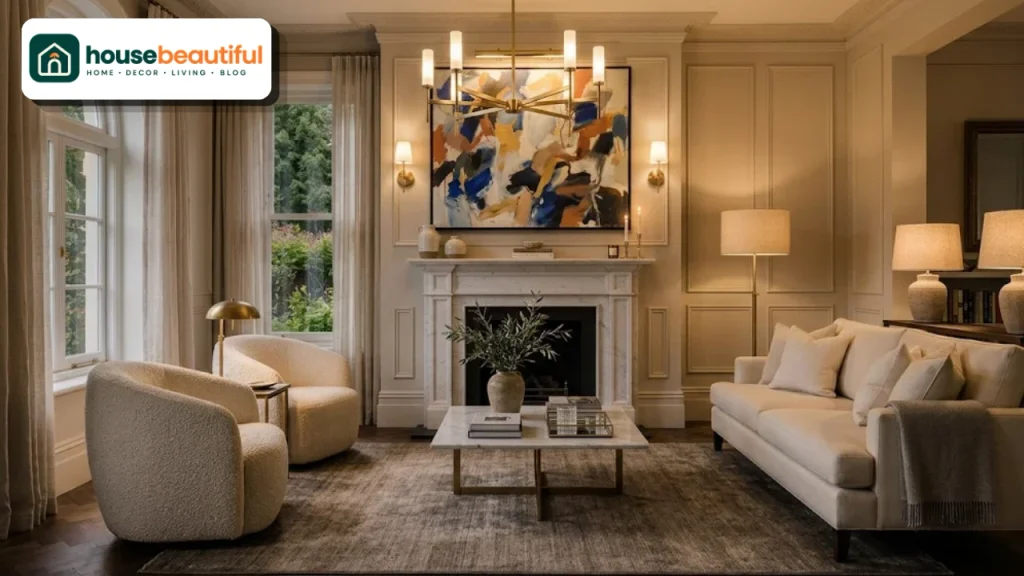
In most classic contemporary rooms, the fireplace is the star. It brings symmetry, warmth and a natural focal point.
A classic marble or stone mantel looks fresh with a large abstract painting or a frameless mirror above it. A pair of matching lamps or vases on the mantel adds symmetry, while one off-center sculptural object adds a contemporary twist.
If there is no fireplace, create a focal wall. Built-in bookcases with paneled backs, a large piece of art above a console, or a feature wall in a deep color all work well.
Many homeowners place the TV on this wall too. Framing it with shelving or paneling, or choosing a frame-style TV that displays art,
keeps the focal point elegant. In a classic contemporary living room, the TV should never be the only thing the eye lands on.
Flooring Choices
Flooring sets the tone for the whole room.
Herringbone or chevron wood floors are a classic detail that suits contemporary furniture perfectly. Wide-plank oak in a mid-tone feels warm and modern.
Marble or large-format stone-look tiles bring a luxurious, gallery-like feel, especially in warmer climates. Soften them with a large wool or silk-blend rug to keep the room cozy and quiet.
Lighting
Lighting is a perfect place to mix styles.
A classic chandelier, whether crystal or brass, becomes contemporary when paired with clean-lined furniture and a calm palette. Alternatively, a sculptural modern pendant looks striking against classic molding.
Use pairs of table lamps on side tables or a console for classic symmetry. Add picture lights above art, wall sconces beside the fireplace and a slim floor lamp beside a reading chair.
Warm bulbs around 2700K and dimmers keep the room elegant and inviting in the evening. For more ideas, see our guide to living room lighting.
Rugs, Curtains and Textiles
Textiles soften a classic contemporary room and tie its pieces together.
A Persian or Oushak-style rug brings classic warmth and pattern, and it looks especially fresh in a contemporary setting. A flat-weave or subtle modern rug works well under classic furniture.
Curtains in linen, wool or velvet, hung high and long, add elegance. Keep the hardware simple, such as slim brass or black rods.
Mix textures: velvet, linen, boucle, wool and leather. Keep cushion colors within your palette and vary patterns, such as a classic stripe with a modern geometric.
Storage and Display
Classic rooms often celebrate collections, but contemporary design asks for restraint. The answer is to display less and store more.
Built-in bookcases on either side of a fireplace are a classic feature that also provides practical storage.
Use closed cabinets below for everyday items and open shelves above for books and a few treasured objects.
When styling shelves, group items by color or material, leave generous gaps and mix horizontal and vertical stacks of books. One or two classic pieces, such as a pair of porcelain vases, look striking next to modern ceramics.
A sideboard or console behind the sofa offers another surface for lamps and display, while hiding chargers, remotes and games inside.
Art and Accessories
Art is one of the easiest ways to make a classic room contemporary.
A large abstract painting above a traditional fireplace is a signature classic contemporary move. Black-and-white photography in simple frames, or a modern sculpture on a classic console, creates the same contrast.
Keep accessories edited. Choose a few meaningful objects: a pair of classic vases, a stack of art books, a sculptural bowl and fresh flowers or branches.
For hanging heights and sizing, read our guide on how to decorate a living room wall.
Mirrors add light and elegance. A large gilt or antique-finish mirror over the mantel looks classic, while a round mirror with a slim frame feels more contemporary.
Bringing in Greenery
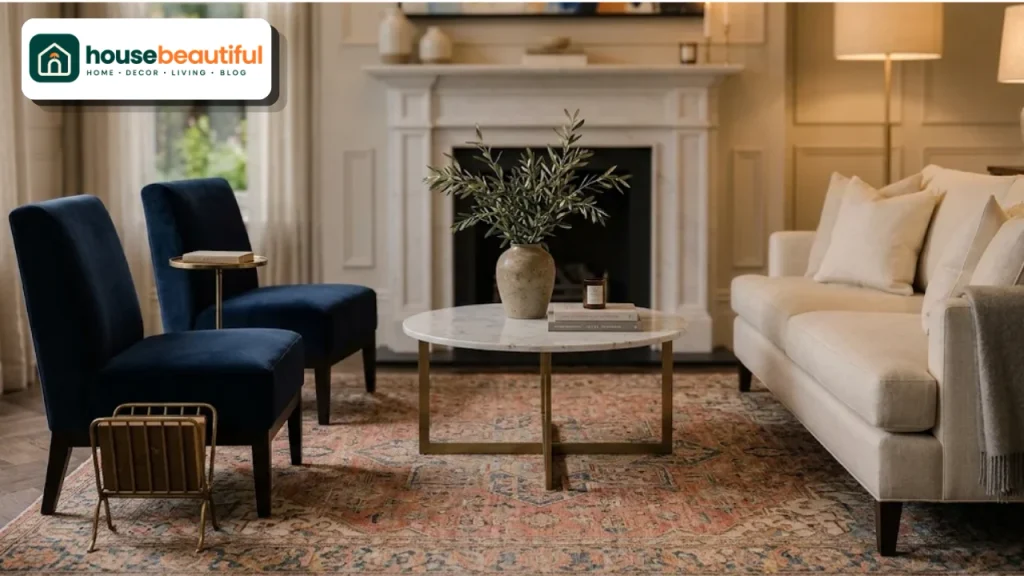
Plants soften classic architecture and make a room feel lived-in.
A tall olive tree or fiddle-leaf fig in a classic urn or a simple stone pot suits this style. Smaller arrangements of branches, orchids or fresh flowers on the coffee table or mantel add life without clutter.
Keep containers in a consistent palette, such as stone, terracotta or matte black, so plants feel part of the design.
Materials and Finishes
Materials carry a lot of the style.
Marble, travertine and limestone feel classic and luxurious, yet suit modern shapes. Brass and bronze add warmth; mixing them with matte black keeps the look current.
Wood should be warm and natural. Mid-tone and dark woods feel classic, while lighter oak feels contemporary. Using both, in a consistent family of tones, works well.
Choose a small set of finishes and repeat them across the room. Repetition is what makes a mix of styles feel deliberate.
Updating an Existing Traditional Room
Many people arrive at this style by updating a traditional living room rather than starting from scratch. The good news is that you can usually keep most of what you have.
Start by editing. Remove about a third of the accessories and any furniture that crowds the room. Space alone will make the room feel more contemporary.
Repaint in a calmer, warmer neutral, and consider painting dark wood trim to match the walls. Replace heavy, patterned curtains with simpler linen or wool panels.
Then introduce two or three contemporary pieces: a large abstract artwork, a sculptural lamp or pendant, and a clean-lined coffee table or accent chair. These few changes shift the whole balance of the room.
Open-Plan Classic Contemporary Spaces
The style also works in open-plan homes, where the living room flows into dining and kitchen areas.
Define the living zone with a large classic-style rug and the back of a tailored sofa. Use a statement chandelier over the dining table and a different but related light over the seating area.
Repeat finishes across the whole space, such as brass in the kitchen hardware, dining chandelier and living room lamps. This repetition makes an open plan feel like one considered classic contemporary living room rather than separate areas.
Seasonal Styling
A calm classic contemporary base makes seasonal changes easy.
In spring and summer, use linen cushions, lighter throws, fresh flowers and branches, and keep surfaces clear. Let natural light dominate.
In autumn and winter, layer velvet cushions, wool throws and candles on the mantel. Swap in deeper-toned flowers or dried arrangements for a richer, cozier mood.
Keep seasonal changes to textiles and accessories, so the core design stays timeless.
Small Classic Contemporary Living Rooms
A classic contemporary living room works beautifully in smaller spaces with a few adjustments.
Use a light, tonal palette and paint walls and trim the same color to make the room feel bigger. Choose a compact tailored sofa and one or two slim chairs rather than a full suite.
A round marble side table or a small oval coffee table saves space. A large mirror opposite a window doubles the light.
Keep accessories to a minimum and use wall-mounted lights to free surfaces. Our post on small living room ideas has more space-saving tips.
Family-Friendly Classic Contemporary Rooms
Elegance and family life can go together.
Choose performance velvet or washable linen slipcovers for the sofa. Mid-tone colors hide marks better than pure white.
Rounded coffee tables, such as a stone oval or upholstered ottoman, are safer for children. Closed storage keeps toys out of sight, so the room can return to calm quickly.
A practical classic contemporary living room might have a tufted ottoman instead of a glass coffee table, washable rugs and a cabinet that hides games and remotes.
Budget-Friendly Ideas
You can achieve this look without a large budget.
| Low-cost change | Impact |
|---|---|
| Add simple picture-frame molding | Instant classic architecture |
| Paint walls and trim one warm neutral | Calm, modern backdrop |
| Hang curtains high and long | Elegant, taller room |
| Swap lampshades and hardware to brass or black | Updated finishes |
| Buy one vintage piece | Adds soul and history |
| Hang one large abstract print | Contemporary focal point |
Vintage and secondhand shops are full of classic pieces, such as mirrors, chairs and side tables, that become contemporary when paired with clean-lined furniture.
A Step-by-Step Plan
Follow this order to build the room with confidence.
Decide whether classic or contemporary will lead.
Choose a palette of two or three main colors plus black accents.
Add or restore architectural details such as molding or a mantel.
Plan the layout around the focal point with symmetrical seating.
Buy the sofa and rug, then bridge pieces such as a marble coffee table.
Layer lighting: chandelier or pendant, table lamps and sconces.
Add art, mirrors, textiles and a few meaningful accessories.
Common Mistakes to Avoid
Too much of everything. Filling the room with antiques and accessories makes it feel dated. Edit ruthlessly.
No unifying palette. Mixed styles need a shared color story to feel cohesive.
Matching furniture sets. A matching suite looks like a showroom. Mix pieces with care.
Ignoring scale. Classic pieces can be large. Make sure furniture fits the room and leaves space to move.
Cold contemporary pieces only. Without warm wood, texture ,and soft lighting, the room can feel sterile.
FAQs:
What is a classic contemporary living room?
It is a living room that blends traditional elements, such as molding, symmetry,y and classic furniture shapes, with contemporary clean lines, calm colors, and modern art.
How do I mix classic and contemporary furniture?
Choose a lead style, keep a consistent color palette, use bridge pieces that combine both styles, and balance curved and straight lines.
What colors suit a classic contemporary living room?
Warm neutrals such as ivory, greig,e and stone, withbroadp accents like navy, forest green or oxblood, and touches of black.
Is classic contemporary the same as transitional?
They are similar. Transitional usually leans softer and more neutral, while classic contemporary often keeps stronger architectural detail and contrast.
What furniture suits this style?
Tailored sofas, wingback or slipper chairs, marble coffee tables, brass lighting, and classic cabinets with modern hardware.
How do I make a traditional living room feel more contemporary?
Simplify the palette, remove clutter, add abstract art, use sculptural llightingg and introduce some clean-lined furniture.
What rug works in a classic contemporary living room?
A Persian or Oushak-style rug adds classic warmth, while a subtle modern rug suits more traditional furniture.
Can a small room be classic contemporary?
Yes. Use a light tonal palette, compact tailored furniture, a large mirr,or and minimal accessories.
What lighting suits this style?
A classic or sculptural chandelier, pairs of table lamps, wall sconces and picture lights, all with warm bulbs.
Does classic contemporary style date quickly?
No. Because it balances timeless architecture with restrained modern elements, it ages more gracefully than trend-led styles.