
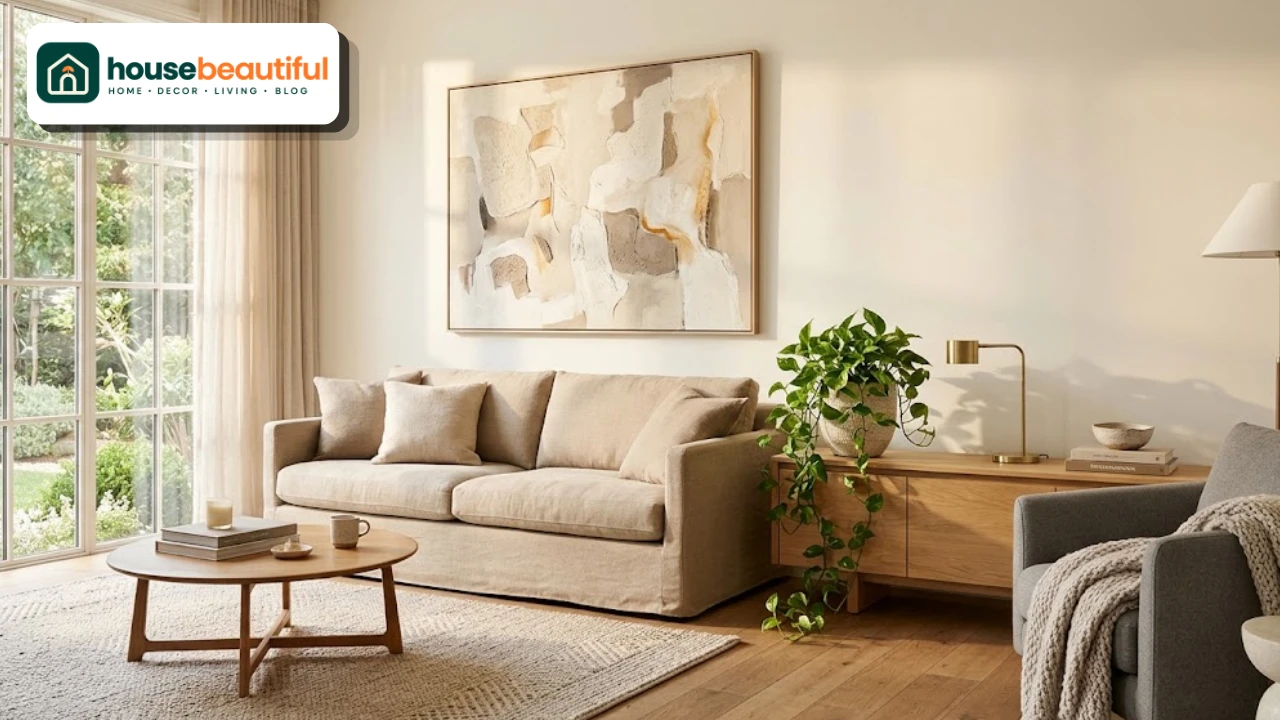
You have probably stood in front of it more than once. The big, flat wall behind the sofa, holding nothing but a light switch and a vague sense that the room is unfinished.
So you scroll for ideas. You find hundreds of beautiful photos and almost no explanation of why they work, or how big, how high, and how far apart anything should be.
This guide fixes that. It covers how to decorate a living room wall the way a designer actually approaches it:
read the wall first, apply a few measurements, then choose the idea that suits your space, budget, and lease.
Start by Reading the Wall, Not Pinterest
Most wall decor goes wrong before anything is bought. People pick an idea they love, then try to force it onto a wall that wants something else.
Spend five minutes on these four questions first. They narrow hundreds of options down to three or four that will genuinely work.
What job does this wall have
Every living room has one wall that the eye lands on first when you walk in. That is your focal wall, and it deserves the boldest move.
The other walls are supporting cast. They need balance and some interest, not competition. A room where all four walls shout usually feels busy rather than styled.
What is in front of it
Furniture sets the rules. A sofa, console table, sideboard, or media unit becomes the anchor, and anything on the wall should relate to it in width and height.
A wall with nothing in front of it behaves differently. It can carry taller, more architectural treatments, or a single large piece hung at eye level.
How big is it, really
Measure the width and the ceiling height. Write them down. A 14-foot wall under 9-foot ceilings needs a very different solution than a 7-foot alcove.
This single step prevents the most common problem in living rooms everywhere: decor that is simply too small for the wall it is on.
How does light hit it
A wall facing a window gets glare, which can wash out glossy prints and glass frames. A dark wall in a north-facing room may need a mirror or a lighter treatment to stop it feeling heavy.
Check the wall in the morning and again at night under your lamps. You will often see it differently.
The Measurements Designers Quietly Rely On
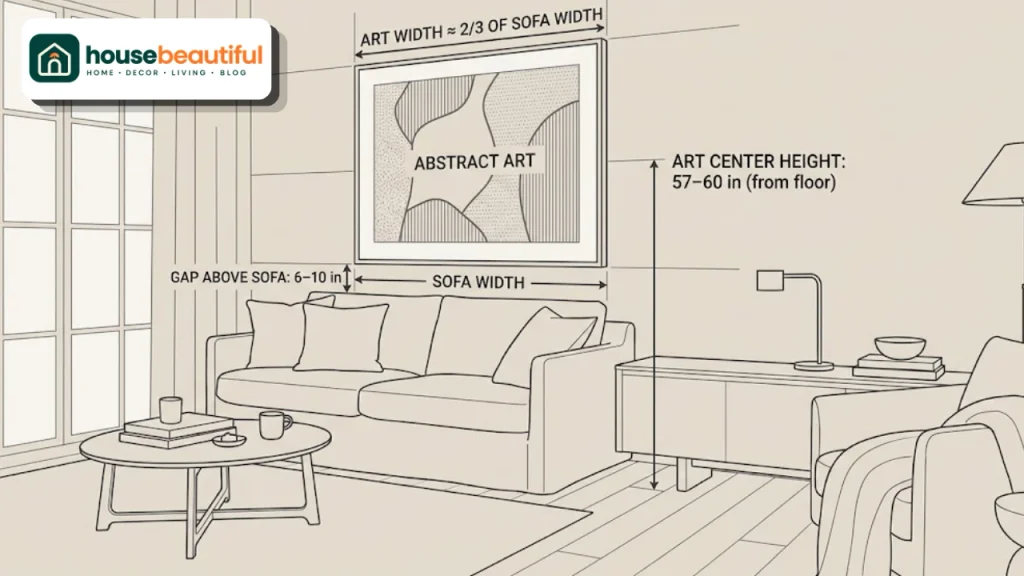
This is the part most articles skip, and it is the part that makes walls look intentional. Learning how to decorate a living room wall properly is mostly about scale and height.
The 57-inch rule for hanging height
Galleries and museums hang art so the center of the piece sits about 57 inches (145 cm) from the floor. That is roughly average eye level, which is why art at this height feels natural.
In homes, many designers stretch this to 57–60 inches. Higher ceilings and tall trim can pull the visual center up a little.
To find your nail position, take 57, add half the frame’s height, then subtract the distance from the top of the frame down to the taut wire or hook.
The furniture gap overrides eye level
Over a sofa, console, or sideboard, the art must connect to the furniture. Leave about 6 to 10 inches between the top of the sofa back and the bottom of the frame.
If the gap and the 57-inch center disagree, follow the gap. Art floating 20 inches above a sofa looks lost, no matter how good it is.
The two-thirds rule for width
Art or a grouping above furniture should span roughly two-thirds of the furniture’s width. A safe range is about 60 to 75 percent.
For an 84-inch sofa, that means art or an arrangement around 50 to 63 inches wide. A single 24-inch print there will always look like a postage stamp.
Treat groups as one shape
For gallery walls and pairs, measure the whole arrangement as if it were one rectangle. Apply the height and width rules to that outer rectangle, not to each frame.
Keep gaps between frames consistent, usually 2 to 3 inches. Consistent spacing is what makes a collection read as a single piece.
Ideas That Work on Almost Any Living Room Wall
With the measurements in hand, the ideas start to make sense. Here are the options that consistently earn their place, and when each one is the right call.
One oversized statement piece
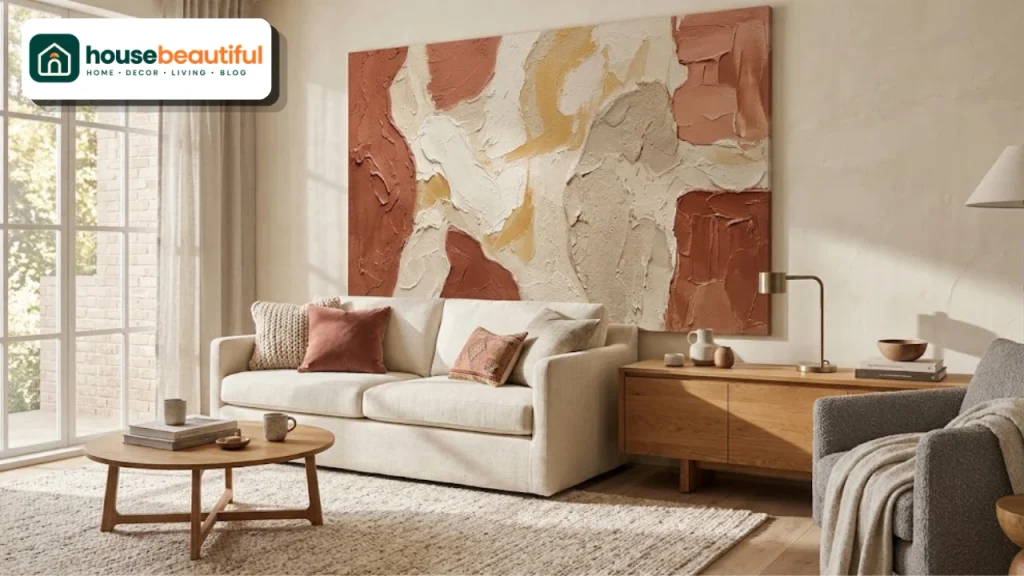
A single large canvas is the quickest way to make a room feel designed. It is calmer than a gallery wall and much easier to get right.
Abstracts, large scale photography, and textural canvases all work. Pick a piece that pulls one or two colors from your cushions or rug, and the room will feel connected.
A curated gallery wall
Gallery walls suit people with a story to tell: travel prints, family photos, children’s drawings, vintage finds. The trick is a unifying thread.
Choose one common element, such as matching frame color, a limited palette, or a consistent mat. Then lay everything out on the floor before a single nail goes in.
Two layouts are easy to live with. A tight grid feels modern and tidy. An organic salon-style cluster feels collected but still needs a straight outer edge on at least one side to look deliberate.
Mirrors that do real work
A large mirror bounces light and makes a small living room feel wider. Place it across from or beside a window, not directly facing a cluttered corner it will double.
Arched floor mirrors leaned against the wall, or a round mirror over a console, are two of the most forgiving options for beginners.
Floating shelves and picture ledges
Shelves turn a wall into a display that can change with the seasons. Books, ceramics, a trailing plant, and a framed print or two give layers without permanent commitment.
Picture ledges are the gallery wall for indecisive people. Frames lean, overlap, and swap without new holes in the wall.
Textiles, rugs, and woven hangings
Fabric softens hard rooms and improves acoustics in echoey spaces with tile or wooden floors. A large woven hanging, a framed textile, or a quilt on a rod adds warmth that paint cannot.
This fits the wider shift designers describe for 2026 toward warmer, layered, more personal rooms instead of stark, staged ones.
Plants and living walls
Wall planters, hanging pots, and trailing pothos on a high shelf bring life to a flat wall. Real plants need light, so be honest about the wall’s conditions.
For low-light walls, preserved moss panels or quality faux greenery give the same softness without the guilt of a dying fern.
Treating the Wall Itself
Sometimes the best decor is not hung on the wall at all. It is the wall. These options change the surface, and often make whatever you hang later look better.
Paint and accent walls
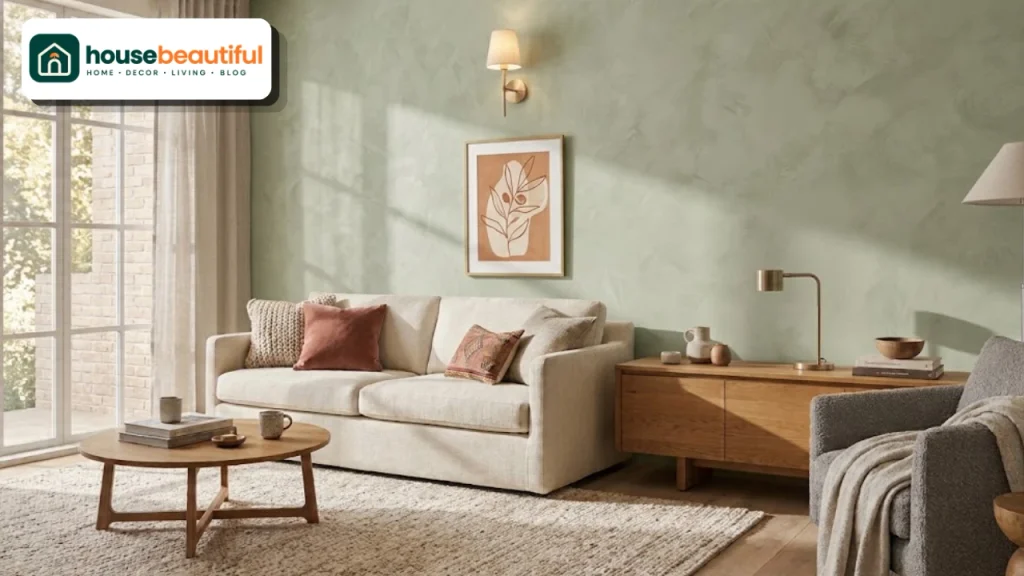
An accent wall is the cheapest dramatic change in the house. Deep greens, warm terracotta, inky blue, and earthy browns are all strong choices for a focal wall right now.
Pick the wall that is already the focal point. Painting a random side wall pulls attention to the wrong place and can make the room feel lopsided.
Limewash and textured finishes
Limewash and mineral paints give soft, cloudy movement that flat paint cannot. They photograph beautifully and suit warm minimalist, Mediterranean, and Japandi rooms.
They are less forgiving to apply. Practice on a piece of board first, and expect a slightly uneven finish. That unevenness is the point.
Wallpaper and murals
A large botanical, a scenic mural, or a subtle grasscloth can carry an entire wall with no art at all. This is a strong answer if you love pattern but hate choosing frames.
Peel-and-stick versions have improved a lot. They are now a genuine option for renters and anyone nervous about commitment.
Paneling, molding, and board and batten
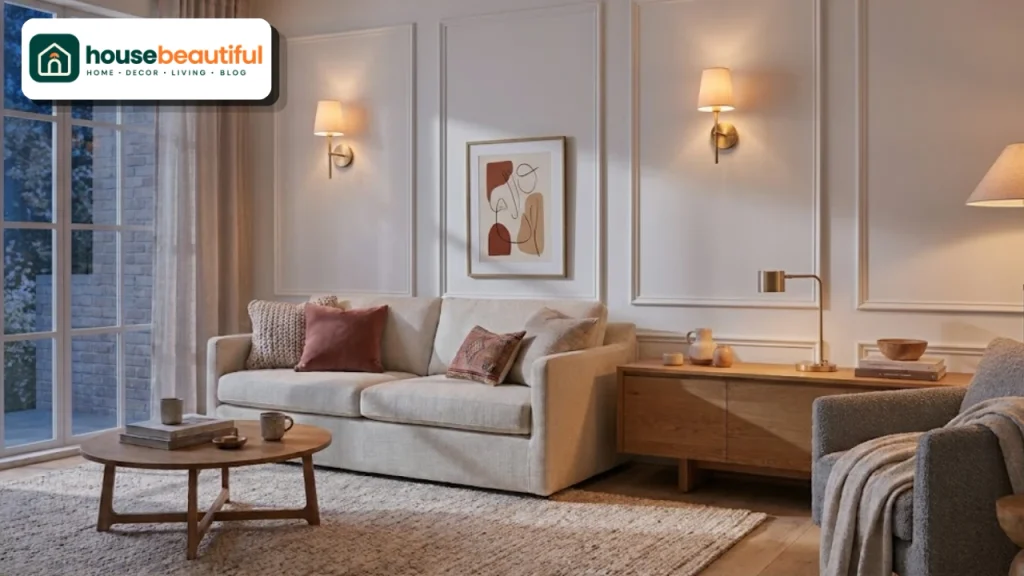
Picture-frame molding, board and batten, slatted wood, or fluted panels add architecture to builder-grade boxes. Designers keep reaching for wall treatments like these because they add depth that lasts.
Paneling also solves a common problem. It gives a large wall structure, so a smaller piece of art can sit inside a molded frame and still look correctly scaled.
Matching the Idea to Your Specific Wall
This is where most advice gets vague. Here is a straight answer for the walls people actually struggle with, which is really the heart of how to decorate a living room wall you live with every day.
The long, wide wall
Break a very long wall into zones. A sofa with art in the middle, plus a tall plant or floor lamp at one end, reads better than one tiny piece stranded in a sea of paint.
A horizontal triptych, a wide gallery grid, or built-in shelving running the full length also works well. The goal is to fill the width, not just the center.
The tall wall with high ceilings
Resist hanging art up near the ceiling. It looks cold and is hard to enjoy from the sofa.
Keep the center of the arrangement close to eye level and build upward instead: a vertical stack of two large pieces, a tall mirror, floor-to-ceiling shelving, or a wall treatment that carries the eye up.
The small or narrow wall
Small walls are perfect for one bold moment. A single vertical print, a sculptural sconce, or a small plate arrangement can look jewel-like here.
Avoid overcrowding. On a narrow wall, negative space is part of the design.
The TV wall
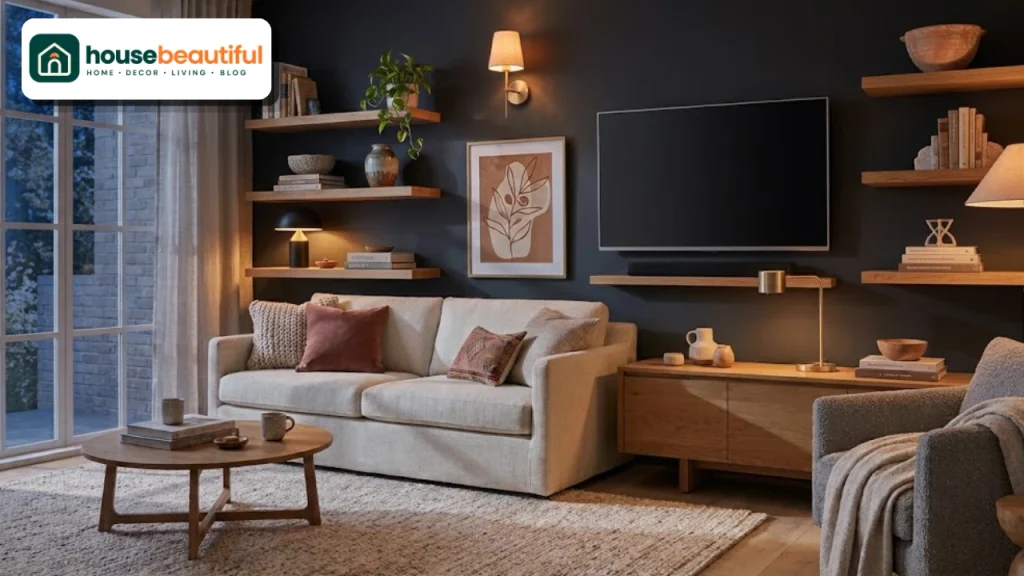
The TV is the elephant in the living room. You have three good options: hide it, frame it, or blend it.
To blend it, a dark painted wall makes a black screen nearly disappear. To frame it, flank it with shelves or built-ins so it becomes part of a composition. To hide it, a frame-style TV can display art when switched off.
Whatever you choose, avoid a gallery wall that crowds tightly around the screen. It usually looks like the TV crashed into the art.
The fireplace and mantel wall
A mantel is already a focal point, so the art above it should respect it. Keep the bottom of the piece a few inches above the mantel shelf, and size it close to the mantel’s width.
Layering works beautifully here. Lean a large piece on the mantel, overlap a smaller frame in front, and finish with a candle or vase to one side.
Options for Renters and Tighter Budgets
You do not need to own your home or spend heavily to get this right. Knowing how to decorate a living room wall on a budget is mostly about choosing high-impact, low-damage moves.
| Budget level | Ideas that make the biggest difference |
|---|---|
| Almost free | Rearrange existing frames, print your own photos large, hang a scarf or rug |
| Low cost | Picture ledge, removable adhesive strips, peel-and-stick wallpaper, framed fabric |
| Mid range | One oversized canvas, a large mirror, floating shelves, a painted accent wall |
| Investment | Original art, custom framing, paneling or built-in shelving |
For renters, removable hooks rated for the frame’s weight, leaning art on furniture, and tension-rod textiles all avoid big holes. Always check your lease before painting, even with a promise to repaint.
One smart trick: buy affordable prints but invest in good, larger frames with wide mats. A cheap print in a generous frame looks far more expensive than it is.
Do Not Forget to Light the Wall
This is the step that separates a nice wall from a beautiful one, and almost nobody mentions it. Art that sits in shadow after sunset barely exists.
Plug-in wall sconces, rechargeable picture lights, or a floor lamp angled toward the art all work without an electrician. Warm bulbs around 2700K keep the room cozy in the evening.
Common Mistakes and How to Fix Them
Most wall problems come down to a handful of repeat errors. The good news is that every one has an easy fix.
Art too small. This is the number one mistake. Fix it by grouping smaller pieces into one larger arrangement or adding a wide mat and bigger frame.
Hung too high. If you have to tilt your head back, it is too high. Lower it until the center sits near eye level or the gap above the sofa is under a foot.
Off-center with the furniture. Center art on the sofa or console, not on the wall, when the furniture is not centered on the wall.
No unifying thread. A gallery wall with every frame, color, and style looks chaotic. Repeat one element at least three times.
Every wall decorated equally. Give one wall the spotlight and keep the others quieter. Your eyes need somewhere to rest.
A Simple Order of Operations
If you want to get started this weekend, follow this sequence. It removes most of the guesswork about how to decorate a living room wall without regret.
Measure the wall and the furniture in front of it.
Decide the wall’s job: focal point or supporting wall.
Choose one main idea from the sections above.
Cut kraft paper templates of each frame and tape them up with painter’s tape.
Live with the templates for a day or two, then adjust.
Hang using a level, a stud finder for heavy pieces, and the right anchors.
Add lighting and step back at night to judge the finished look.
Take your time with steps four and five. The paper stage is where good walls are made, and it costs almost nothing.
A well-dressed wall rarely comes from buying more. It comes from choosing the right scale, the right height, and one clear idea, then letting the rest of the room support it.
FAQs:
What is the easiest way to decorate a large living room wall?
One oversized piece of art or a large mirror is the easiest option. Size it to about two-thirds the width of the sofa below, and hang it 6 to 10 inches above the sofa back.
How high should I hang art above my couch?
Leave 6 to 10 inches between the top of the sofa back and the bottom of the frame. On an open wall, center the art about 57 to 60 inches from the floor.
What size art should go above a sofa?
Aim for art or a grouping roughly 60 to 75 percent of the sofa’s width. For a standard 84-inch sofa, that is about 50 to 63 inches across.
How do I decorate a living room wall without art?
Try a painted accent wall, limewash, wallpaper, paneling, a large mirror, floating shelves, a textile hanging, or wall planters. These options often add more texture than framed art.
How can I decorate a living room wall on a budget?
Use a picture ledge, print your own photos large, frame fabric or wallpaper offcuts, or paint one accent wall. Spending on bigger frames rather than pricier prints stretches a small budget further.
How do I decorate the wall around a TV?
Paint the wall a dark shade to make the screen blend in, flank it with shelves, or use a frame-style TV. Avoid tight gallery walls that crowd around the screen.
Should every wall in the living room be decorated?
No. Give one focal wall the boldest treatment and keep the others simpler. Empty space gives the eye a place to rest and makes the focal wall stronger.
What wall decor is in style for 2026?
Designers are leaning toward warm, layered, personal rooms. Oversized art, textured finishes like limewash, wood paneling, handcrafted textiles, and curated collections all fit that direction.
Is a gallery wall still a good idea?
Yes, when it has a unifying thread such as matching frames or a tight color palette. Treat the whole arrangement as one shape, and keep spacing between frames at 2 to 3 inches.
Can renters still decorate their living room walls?
Absolutely. Removable adhesive strips, leaning art, picture ledges, peel-and-stick wallpaper, and tension-rod textiles all work. Check your lease before painting or using screws.